

Technical Reviewer: Zia ur Rehman
15+ years in embedded systems and industrial IoT · Reviewed
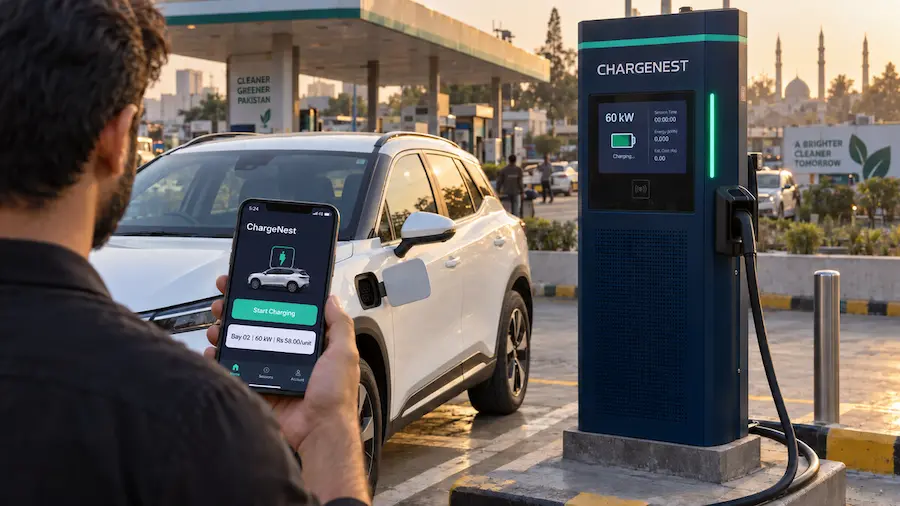
You bought the charger. Now comes the harder question: whose brand runs it, and who owns the customer? With white label EV charging software, you license the application and operate under your name. Alternatively, you can join another network or let a third party provide the chargers as a service.
Each option allocates the charger, brand, pricing, customer relationship and data differently. This guide compares those choices for a site owner or operator in Pakistan. Exact rights and revenue shares depend on the contract you sign.
What are the three ways to run an EV charging business?
There are three broad operating models. With white label, you own the charger and use licensed software under your brand. When you join a network, you connect a charger or site to another operator’s platform, usually with agreed branding and revenue terms. With charging as a service (CaaS), a provider typically funds, installs and operates the charger at your site.
In short, the right choice depends on how much operational work you want and which business assets you intend to keep.
What is white label EV charging software?
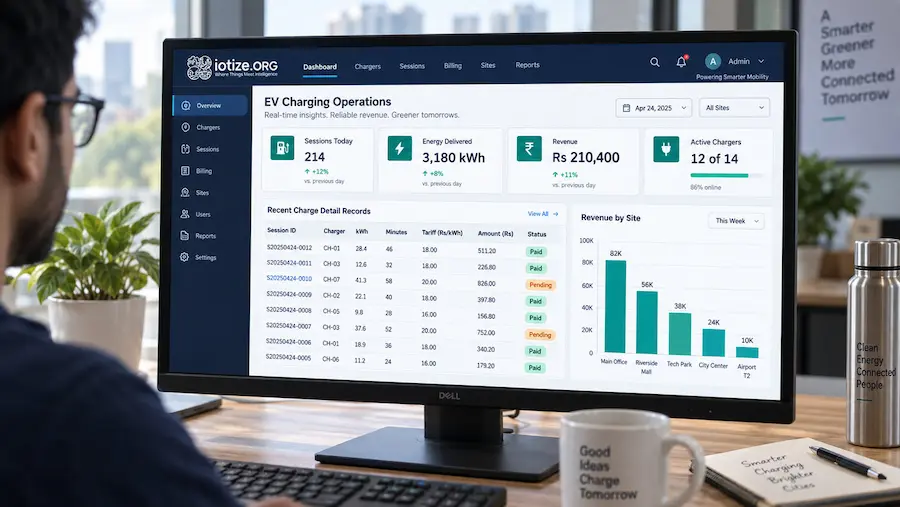
White label EV charging software gives an operator a branded driver app, a driver portal and an operations dashboard without building all the software in house. You buy or already own the chargers and license the platform. The software supplier maintains its technology while your business faces the driver.
For example, IoTize’s white label EV charging solution describes a software layer for OCPP compliant AC and DC chargers, with branding and data export for the operator.
- Driver app and portal: Drivers find chargers, start sessions and pay under your brand.
- Operator dashboard: Your team monitors status, sets tariffs and reviews revenue.
- Host access: A location partner sees its site and the agreed share through a limited login.
What does joining an EV charging network mean?
A network can list your station in its driver app and handle discovery, sessions and payment. That can help a new site reach an existing driver base quickly. However, branding, tariff control, customer access and revenue share vary by agreement. Some networks let you keep the charger and considerable control; others require deeper integration.
Therefore, ask for written terms on data access, payment settlement, roaming, exclusivity and exit. A charger using the Open Charge Point Protocol can often connect to a different compatible backend, but migration still requires technical checks and a workable contract.
What is charging as a service?
Under charging as a service, a provider commonly finances, installs, operates and maintains charging equipment on the host’s site. The host supplies space and may receive an agreed fee or revenue share. Capital cost can be lower for the host, but the provider commonly controls the equipment and day-to-day service.
By contrast, platform as a service (PaaS) in this article means that you own the charger and subscribe to software. Contracts differ, so confirm who owns the hardware at the end of the term, who sets driver prices and whether you can export customer and session data.
Who owns what under each EV charging model?
The comparison below describes typical arrangements, not automatic legal rights. Use it as a checklist when comparing proposals. In particular, a network partnership can assign several rights differently from another network partnership.
| Decision | White label | Network | CaaS |
|---|---|---|---|
| Charger | You | You or network | Usually provider |
| Driver brand | Yours | Often network or shared | Often provider or shared |
| Tariffs | You | As agreed | Usually provider |
| Driver relationship | Yours | As agreed | Usually provider |
| Data access | Exportable in your platform | As agreed | As agreed |
| Operations | Your team or contractor | Shared or network | Provider |
Typical arrangements; your signed contract controls.
Above all, check the customer and data clauses. Repeat drivers and site performance data help you decide where to invest next. Ask whether you can take your accounts and charging records with you if the arrangement ends.
CPO vs eMSP: which role do you want?
A charge point operator (CPO) manages charging infrastructure and its availability. An e-mobility service provider (eMSP) manages the driver account, app and payment experience. A business can perform both roles, or different companies can work together.
Meanwhile, OCPP connects a charger to its management system. OCPI helps independent charging networks share location, tariff and session information for roaming. These protocols address different connections, so confirm the capabilities of the specific hardware and partners in your plan.
Which EV charging model fits your site in Pakistan?
Choose according to the business you want to operate, your capital budget and your appetite for customer support. Pakistan announced a reduction in charging station electricity tariffs in 2025, but a tariff announcement is not a site profit forecast. Your current bill, taxes, demand, charging utilization and contracted costs determine your economics.
Moreover, regulations and tariffs can change. Model a real site using its latest utility bill and the terms each network or service provider offers.
- Build an owned charging brand: Consider white label if you will own chargers, set prices, manage operations and retain driver relationships.
- Test a location with existing demand: Explore a network and compare its reach against fees, data access and contract limits.
- Offer charging as an amenity: Explore CaaS if low capital commitment and outsourced operations matter more than direct control.
How does IoTize white label EV charging software work?
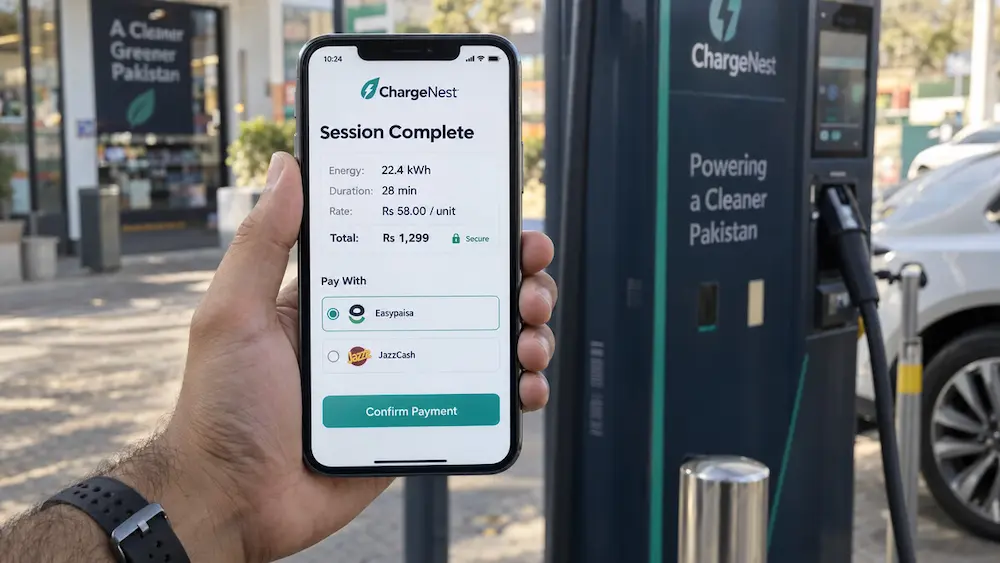
IoTize’s EV charging software is offered as a branded software platform for operators using compatible chargers. Its page describes OCPP 1.6 and 2.0.1, AC and DC support, operator and host dashboards, driver apps, reservations, load management and remote firmware capabilities. IoTize says it can connect local payment methods such as Easypaisa and JazzCash, with charging revenue settling through the operator’s own gateway account.
The published commercial model is a fee per charger per month plus a one-time setup fee. For a real deployment, discuss the charger models, payment provider, features and implementation scope with the IoTize team.
What should you do next?
First, decide who will own your chargers and the driver relationship. Next, ask each provider for written terms on pricing, settlement, data export, support and exit. If you want the software under your own brand, explore the white label solution or contact IoTize with your site and charger list.
Read next: How EV Charging Payments Work in Pakistan.
Ready to Run EV Charging Under Your Brand?
Map the right software, chargers and payment setup to your sites.
Frequently asked questions
Who owns the customer in a white label EV charging model?
Usually the operator whose branded app holds the account. Confirm account control, privacy terms and export rights in your software agreement.
Is joining a network better than white label software?
A network can help you reach drivers sooner. White label is a stronger fit when you intend to develop your own brand and customer base. Compare actual contract terms and support responsibilities.
Can one company be both the CPO and the eMSP?
Yes. An operator can run the chargers and also provide the driver app and billing. It can also partner with another eMSP for roaming.
Can I move an OCPP charger to another platform?
Often, yes, if the charger and new platform support compatible OCPP versions and the device can be reconfigured. Check credentials, firmware, access rights and migration terms before you sign.
Does charging as a service mean I own the charger?
Usually the provider owns the charger during the agreement. Some contracts include a later purchase option, so read the asset and exit clauses carefully.
Who sets the price a driver pays in Pakistan?
It depends on your operating model and contract. A white label operator generally sets its own driver tariff, while a network or service provider may set or share that decision. Check current electricity costs and applicable rules when pricing a site.
Who sets the price a driver pays in Pakistan?
It depends on your operating model and contract. A white label operator generally sets its own driver tariff, while a network or service provider may set or share that decision. Check current electricity costs and applicable rules when pricing a site.
Solution: White Label EV Charging Software
From the blog: Visit the IoTize blog →