
Predictive Maintenance IoT: Predict Machine Failures Before They Happen
Stop reacting to breakdowns. Start preventing them. IoTize predictive maintenance IoT devices read the three signals that warn you first, vibration, temperature, and electrical current, and alert you in real time, before a small fault becomes unplanned downtime.
From an affordable condition monitoring sensor for one machine to a dual-point, SCADA-ready machine health monitor, install in minutes. Stream to IoTize SaaS, your private cloud, or fully on-premise. Your data, your way.
Industrial IoT since 2015 · on-premise, private cloud, or IoTize SaaS · open protocols MQTT, HTTP, Modbus TCP
Unplanned downtime starts long before a machine stops
Most factory breakdowns do not come out of nowhere. A bearing starts to wear, a motor pulls too much current, a pump runs hot, and the early warning signs are there for days or weeks. Without condition monitoring, nobody is listening to them, so by the time a person notices, the damage is done: emergency repairs, scrapped output, missed orders, and overtime.
Four hidden costs of running machines blind:
- No early warning: Faults develop silently and surface only as failure, with no real-time machine monitoring to catch them.
- Manual inspections are slow: Scheduled walk-arounds miss the moment a vibration or temperature reading drifts.
- Blind spots on the floor: You cannot fix what you cannot see, and legacy machines rarely report anything.
- Disconnected legacy equipment: Older machines stay outside your data, so predictive maintenance never reaches them.
Heat, vibration, and current all warn you first, if something is listening.
The payoff of catching machine failures early
Source: U.S. Department of Energy, Operations and Maintenance Best Practices Guide (Release 3.0). Industry averages, not a guarantee.
Move from reactive repair to predictive maintenance
In other words, IoTize closes the gap between “the machine is fine” and “the machine just stopped.” As a result, our IoT predictive maintenance system continuously reads each machine and turns raw signals into early fault detection, so your team acts on a trend instead of an emergency. In practice, this is condition-based maintenance: monitor the asset, catch the anomaly, and prevent the failure.
High cost, most downtime.
Lower risk, catches problems early.
Lowest downtime, longest equipment life.
Specifically, there are three signals that matter for machine health monitoring. Here is what each one catches:
- Vibration monitoring: catches imbalance, misalignment, bearing wear, looseness, and resonance on any rotating machine. An industrial vibration sensor is the richest early-warning signal in predictive maintenance. See how vibration sensors detect motor failures.
- Machine temperature monitoring: catches lost lubrication, friction, overload, and cooling failure. As a result, heat becomes the quiet first symptom you actually notice before a fault develops.
- Current monitoring: catches electrical overload and abnormal motor load, read non-invasively with a current sensor, so there is no need to disconnect a single wire.
Watch any one signal, or all three together for full machine health monitoring. Catch the early warning, act before the breakdown, and extend the life of every machine you depend on.
How our predictive maintenance IoT system works, from sensor to action
- Sense. Non-invasive bolt-on and clamp-on sensors read the machine directly: a contact probe for machine temperature monitoring, a 3-axis accelerometer for vibration monitoring, and a non-invasive current sensor for motor current. No rewiring, no disconnection.
- Process at the edge. Edge predictive maintenance runs on the device: it computes RMS velocity, peak values, and a full FFT vibration spectrum on enterprise units, and checks every reading against your thresholds in real time.
- Connect. Data streams over Wi-Fi or Ethernet using open protocols, MQTT, HTTP, and Modbus TCP, for direct industrial integration.
- Deliver. Send machine data wherever you want it: IoTize SaaS, your private cloud, a fully on-premise server, or straight into SCADA, MES, and your own dashboards.
- Alert and act. Configurable high and low limits fire instant alerts, so your maintenance team acts on a developing trend instead of a sudden stop. That is real-time machine monitoring turning into early fault detection.
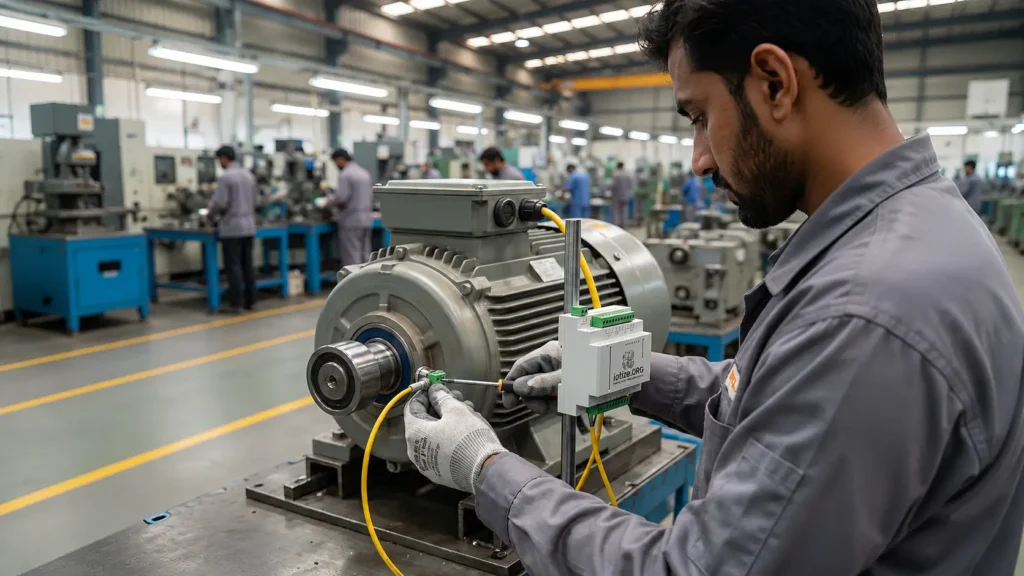
One device, three ways to deploy, and no vendor lock-in
Most IoT vendors funnel your data into their cloud and keep it there. IoTize is built on data freedom, so the same predictive maintenance device connects the way your security and IT teams prefer. This is predictive maintenance without vendor lock-in: choose IoTize SaaS, private cloud machine monitoring, or fully on-premise predictive maintenance, and switch later if your needs change.
Device to cloud dashboard. Nothing to host, the fastest start.
Device to your own server. Machine data never leaves your network.
Modbus TCP into SCADA and MES, or JSON and MQTT into your own platform.
In short, one device covers three ways to deploy, and no matter which path you choose, your machine data is always yours.
Find the right predictive maintenance sensor for the job
You can start with a single signal on one machine, or alternatively get the full machine health picture in one node. Either way, every predictive maintenance device installs in minutes and scales plant-wide when you are ready.
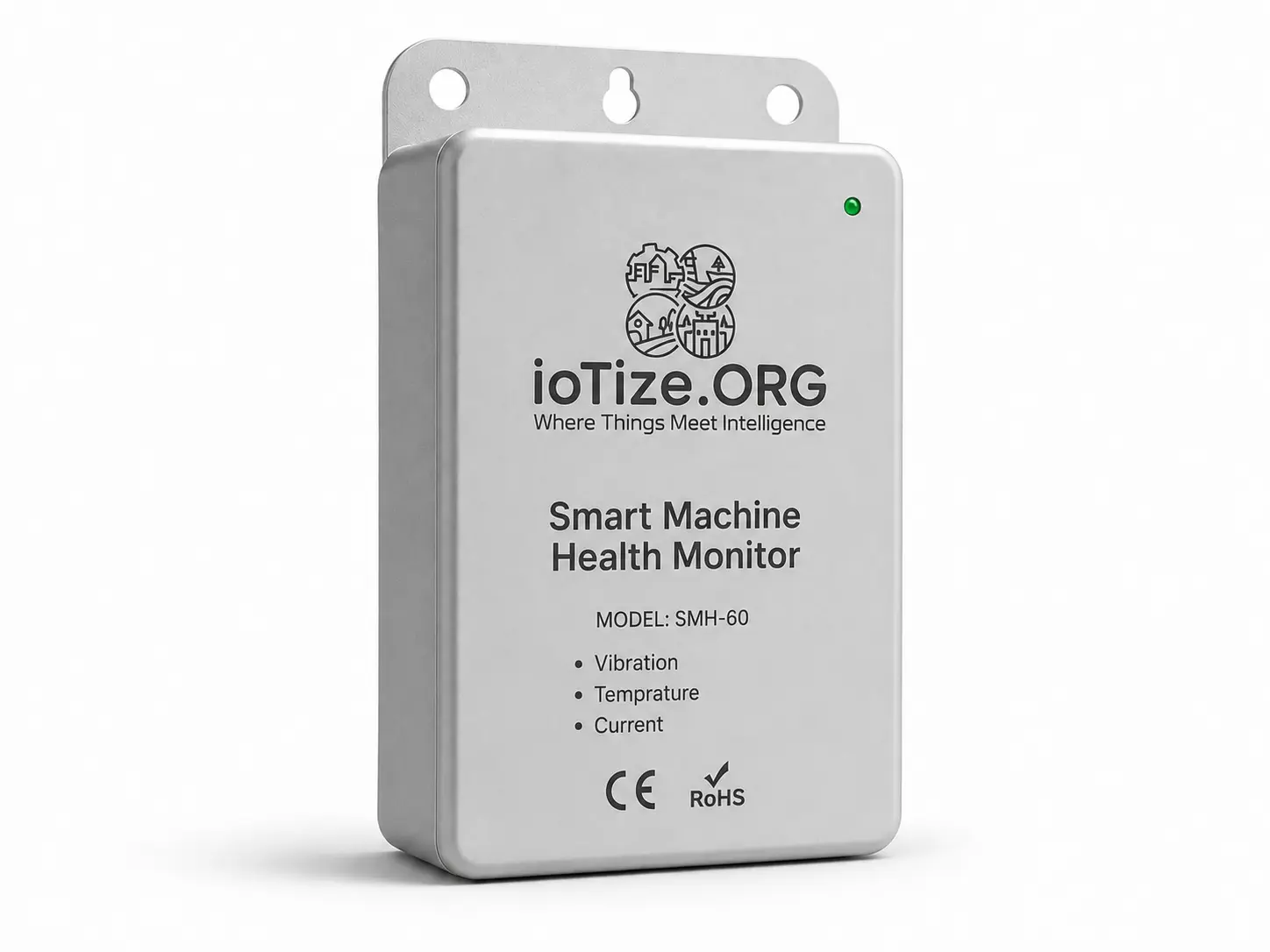
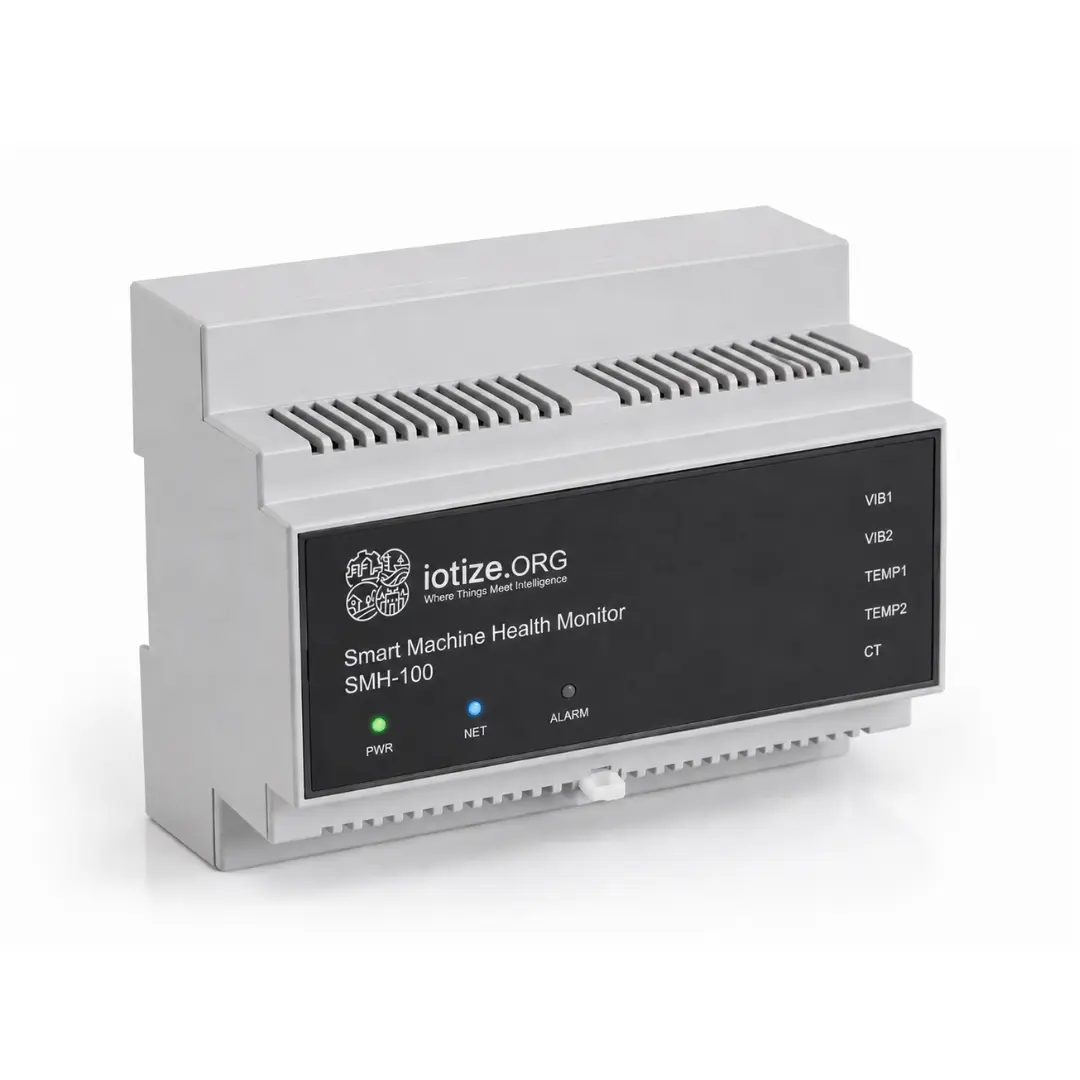
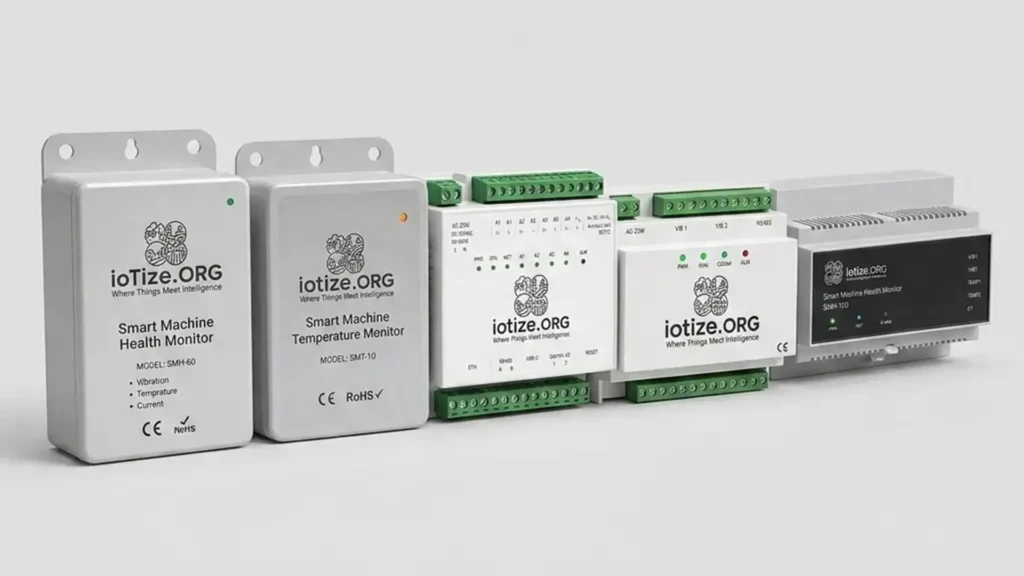
Quick guide: If you need one signal on one machine, choose the Current Monitor (single-phase), the Temperature Monitor, or the Vibration Monitoring Device. If, on the other hand, you want all three signals affordably, choose the Smart Machine Health Monitor. Finally, if you have a critical or variable-speed asset that must talk to SCADA, choose the Enterprise Smart Machine Health Monitor (SMH-100).
Compare all five predictive maintenance devices
| Current Monitor (single-phase) | Temperature Monitor | Vibration Device | Machine Health Monitor | Enterprise SMH-100 | |
|---|---|---|---|---|---|
| Signals | Current, energy | Temperature | Vibration | Vibration, temp, current | Vibration, temp, current, speed |
| Points monitored | 1 | 1 | 1 | 1 | Dual-point |
| Vibration depth | n/a | n/a | RMS, peak, FFT | RMS | RMS, peak, FFT |
| Connectivity | HTTP, MQTT, Modbus TCP | Wi-Fi, MQTT, HTTP | MQTT, HTTP | Wi-Fi, MQTT, HTTP | HTTP, MQTT, Modbus TCP |
| SCADA / MES ready | Yes | n/a | via MQTT, HTTP | n/a | Yes |
| Price | Request a Quote | $59 | Request a Quote | $99 | Request a Quote |
| Best for | Electrical load and energy | A single hot spot | A vibration-critical asset | One machine, full picture | Critical, variable-speed assets |
The five predictive maintenance devices
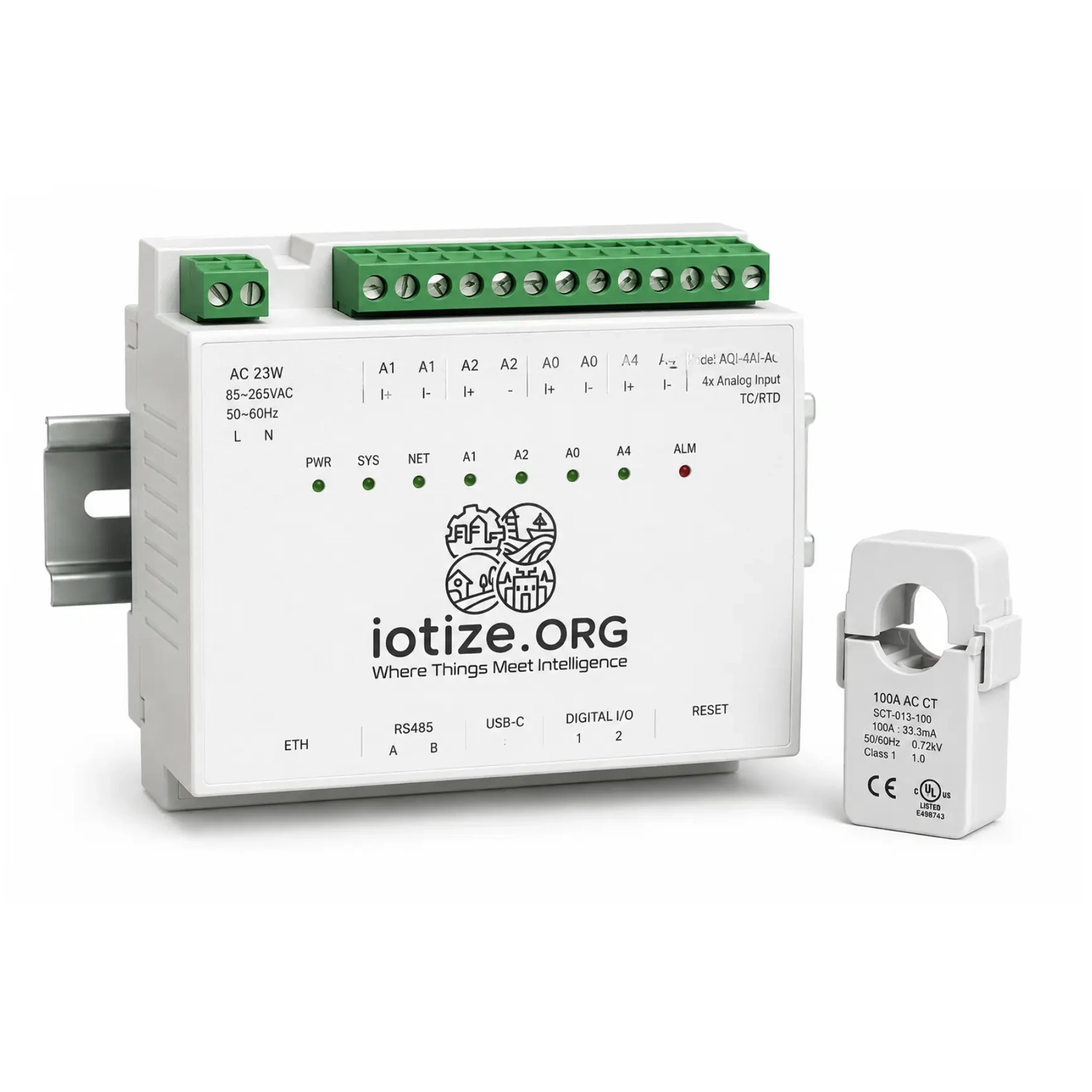
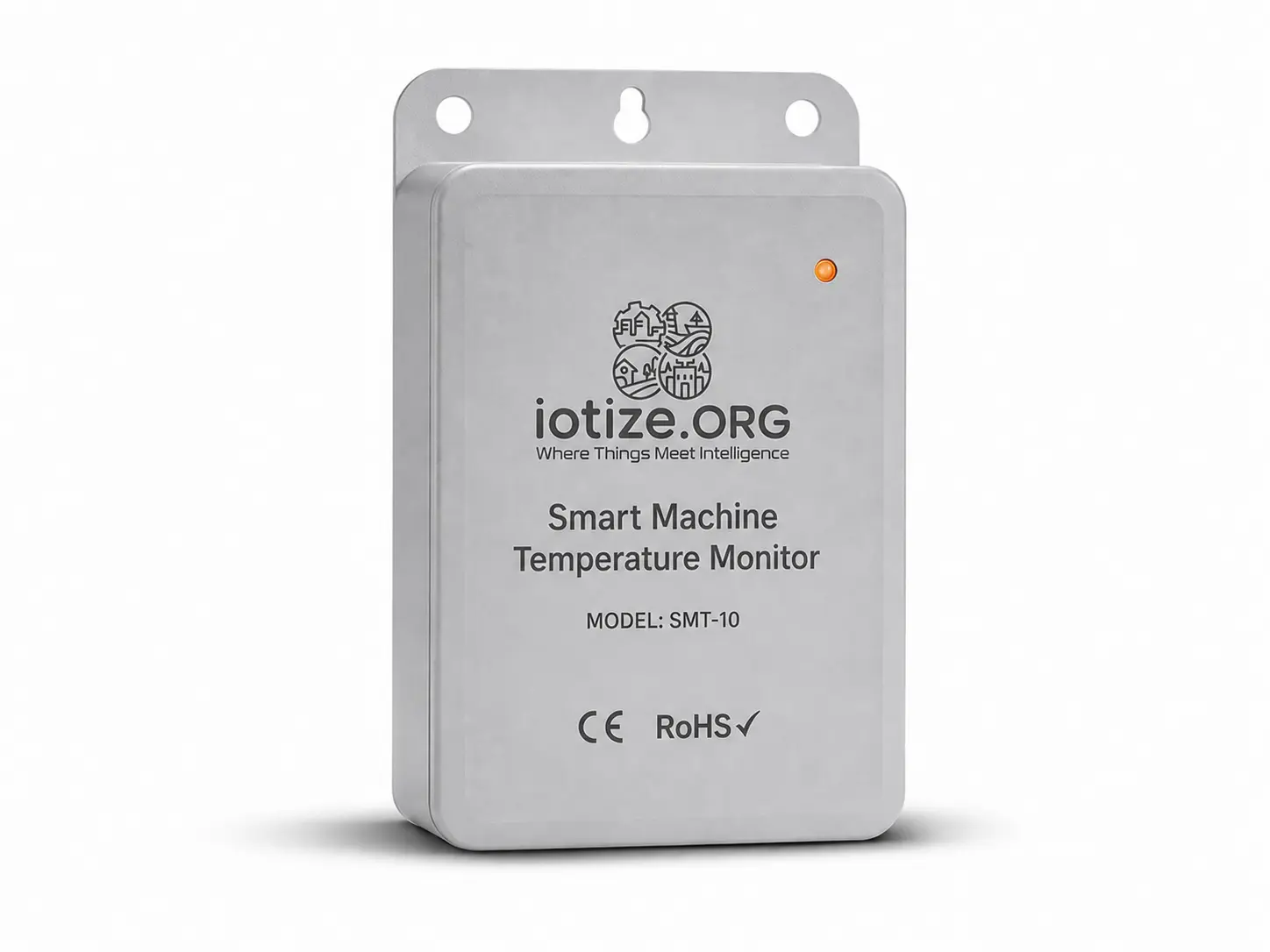
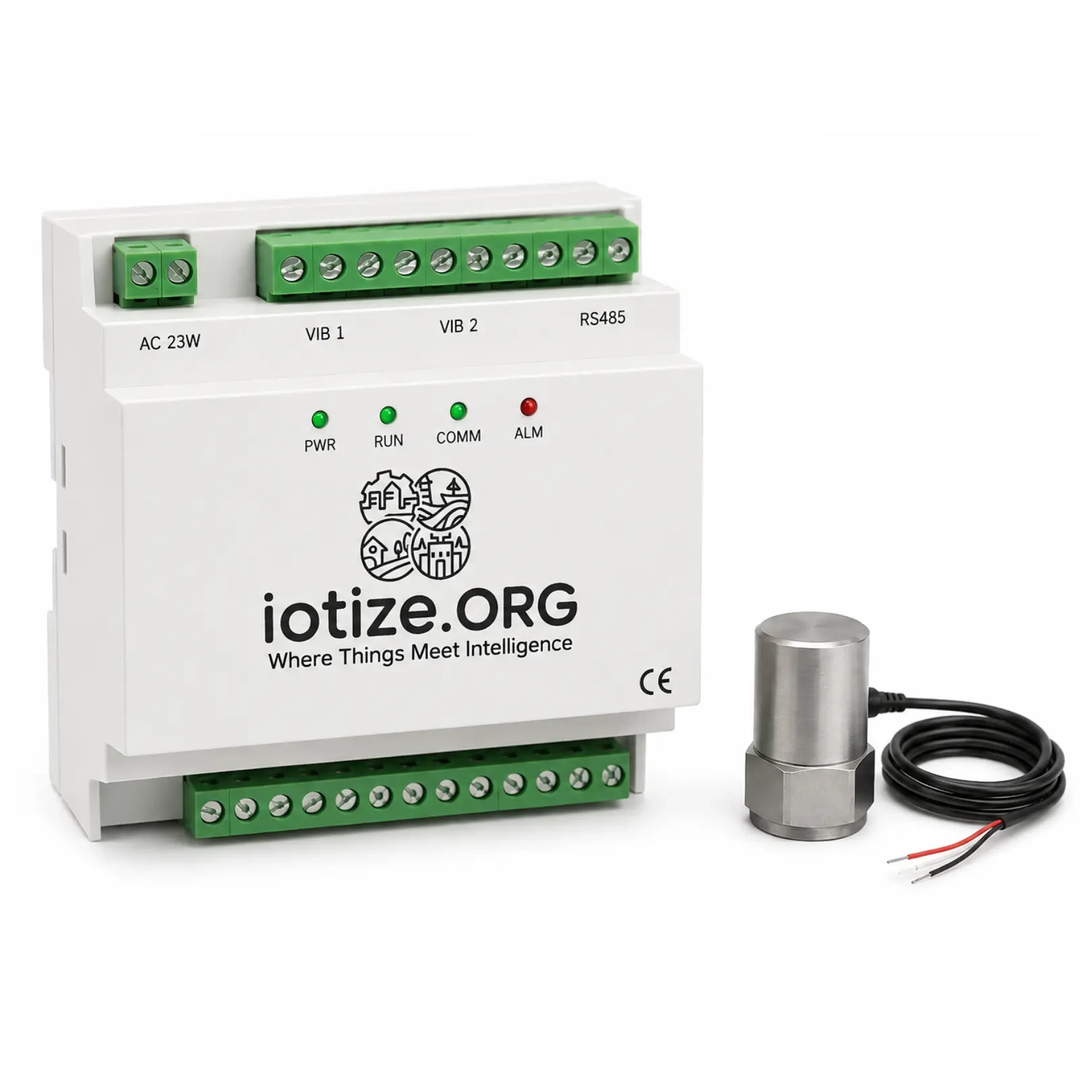
Start with one signal on one machine, or get the full picture in a single node, then scale plant-wide. Your data, your way.
Not sure which predictive maintenance sensor you need?
Get the IoTize Predictive Maintenance Buyer’s Guide, a short PDF that matches each machine to the signal that warns you first and the condition monitoring device that fits.
Answer five quick questions below and we will recommend a device right now.
60-second device selector · question 1 of up to 5
Does this machine need to feed SCADA or MES directly, need two measurement points, or run at variable speed?
Critical assets, deep integration, or VFD machines.
60-second device selector · question 2 of up to 5
Do you want all three signals, vibration, temperature and current, on one machine at the lowest cost?
The complete picture for a single important machine.
60-second device selector · question 3 of up to 5
Is vibration your main concern, and do you want deep diagnostic detail?
Rotating machines where you want FFT-level analysis.
60-second device selector · question 4 of up to 5
Is your main concern electrical load or current on single-phase equipment?
Watching how hard the machine is working electrically.
60-second device selector · question 5 of up to 5
Do you just want the cheapest way to catch overheating on one machine?
A single known hot spot to watch.
Your recommended device
FlagshipEnterprise Smart Machine Health Monitor (SMH-100)
Request a Quote
Dual-point vibration, temperature and current on the same machine, an optional speed input for variable-speed machines, and Modbus TCP for direct SCADA and MES integration. Built for your most critical assets.
Your recommended device
Best valueSmart Machine Health Monitor
$99
All three signals, vibration, temperature and current, in one affordable bolt-on device. The complete early warning picture on a single machine, and the most popular starting point.
Your recommended device
Vibration specialistEnterprise Vibration Monitoring Device
Request a Quote
Deep vibration diagnostics with RMS, peak and full FFT spectrum to pinpoint imbalance, misalignment and bearing faults on a critical rotating machine. HTTP, MQTT and Modbus TCP for SCADA and MES.
Your recommended device
Electrical loadCurrent Monitor (single-phase)
Request a Quote
A single-phase sensor for voltage, current, power and power factor, with runtime and idle tracking. Catches electrical overload and abnormal load, with HTTP, MQTT and Modbus TCP.
Your recommended device
Lowest costMachine Temperature Monitor
$59
A contact sensor that mounts on the exact hot spot and flags overheating before it becomes failure. The cheapest way to bring one machine into predictive maintenance.
What predictive maintenance looks like on your floor
The same condition monitoring devices protect very different machines. Here are common assets and the machine monitoring that catches their faults first:
- Motors and bearings: catch friction, misalignment, and bearing wear before seizure with vibration monitoring. Best fit: Vibration Device, Machine Health Monitor, or SMH-100.
- Pumps and compressors: catch overheating under load and imbalance. Best fit: Machine Health Monitor or SMH-100.
- Gearboxes: catch rising temperature trends, looseness, and resonance. Best fit: Temperature Monitor, Vibration Device, or SMH-100.
- Fans: catch imbalance and resonance with an industrial vibration sensor. Best fit: Vibration Device or SMH-100.
- Electrical panels and motors: catch failing cooling and electrical overload with temperature and current monitoring. Best fit: Temperature Monitor or Current Monitor.
- Variable-speed and VFD machines: accurate fault detection as RPM changes. Best fit: SMH-100 with optional speed input.
- Marine and heavy industry: shaft misalignment and bearing degradation in rugged settings. Best fit: SMH-100.
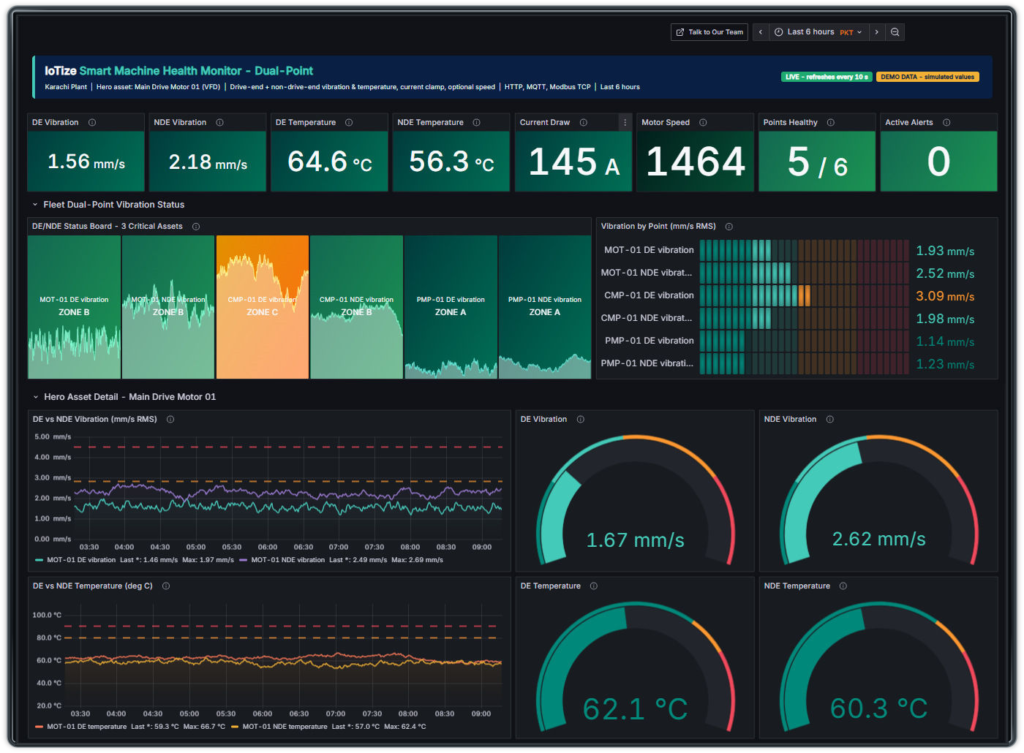
Predictive maintenance in practice
Representative scenario, shown for illustration. Not a specific customer.
The situation. A mid-sized textile manufacturer runs a floor of electric motors around the clock. Over a year, however, several motors fail without warning. Each time, a bearing or winding lets go mid-shift, the line stops, and consequently a full day of output is lost. The failures look random, but each one was preceded by weeks of rising vibration and heat that nobody was watching, because the machines had no condition monitoring.
The change. The plant fits non-invasive predictive maintenance sensors to its most critical motors, reading vibration, temperature, and current, and sets simple high and low alert limits. Now a drifting reading raises a flag while the machine is still running. A worn bearing shows up as climbing vibration days before it would have seized, and the team replaces it during planned downtime instead of in an emergency.
The outcome. As a result, surprise motor failures fall toward zero, and unplanned downtime drops with them. Consequently, repairs move from frantic and unplanned to scheduled and cheap. The same crew now spends its time on the few machines that actually need attention, guided by real-time machine monitoring instead of guesswork, and the line keeps running.
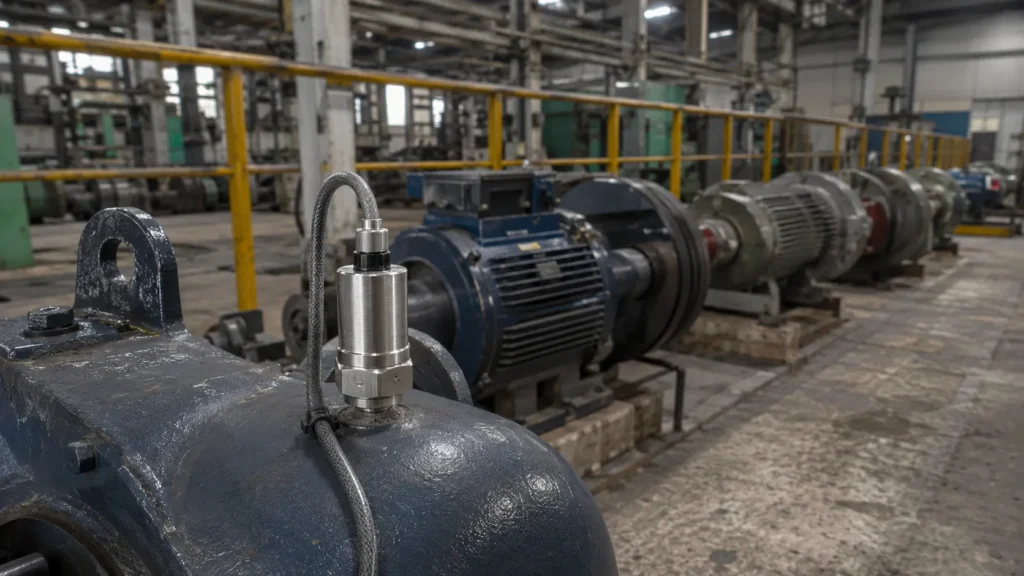
Predictive maintenance built for industries that cannot afford downtime
In particular, IoTize predictive maintenance and condition monitoring serve the sectors where a stopped machine is most expensive:
- Manufacturing: keep production lines running and protect throughput with real-time machine monitoring.
- Marine: monitor shafts, bearings, and engine load in harsh, rugged environments.
- Utilities: protect critical infrastructure and reduce service interruptions.
- Smart cities: connect and monitor distributed equipment from one platform.
- Healthcare: keep critical facility assets reliable.
Why factories choose IoTize for predictive maintenance
- Data freedom, no vendor lock-in: run predictive maintenance on IoTize SaaS, your private cloud, or fully on-premise. Your machine data is always yours.
- Deploy your way: one device, three deployment paths, including direct SCADA and MES integration.
- Non-invasive and fast to install: bolt-on and clamp-on sensors retrofit onto existing and legacy machines in minutes, with no rewiring.
- A full family, entry to enterprise: from an affordable condition monitoring sensor to a dual-point, SCADA-ready machine health monitor.
- Open protocols: MQTT, HTTP, and Modbus TCP, ready for the systems you already run.
- Field-proven industrial IoT: designing and shipping IIoT devices since 2015.
Get started with predictive maintenance in five steps
- Pick your most critical machine, the one you cannot afford to lose.
- Choose a predictive maintenance device from the options above based on the signals you need.
- Mount it in minutes, magnetic, adhesive, or clamp-on. No rewiring, even on legacy machines.
- Connect it your way, IoTize SaaS, on-premise, private cloud, or straight into SCADA and MES.
- Set thresholds, get alerts, and scale. Prove the reduced downtime on one machine, then roll out plant-wide.
All Your Devices, One Live Platform
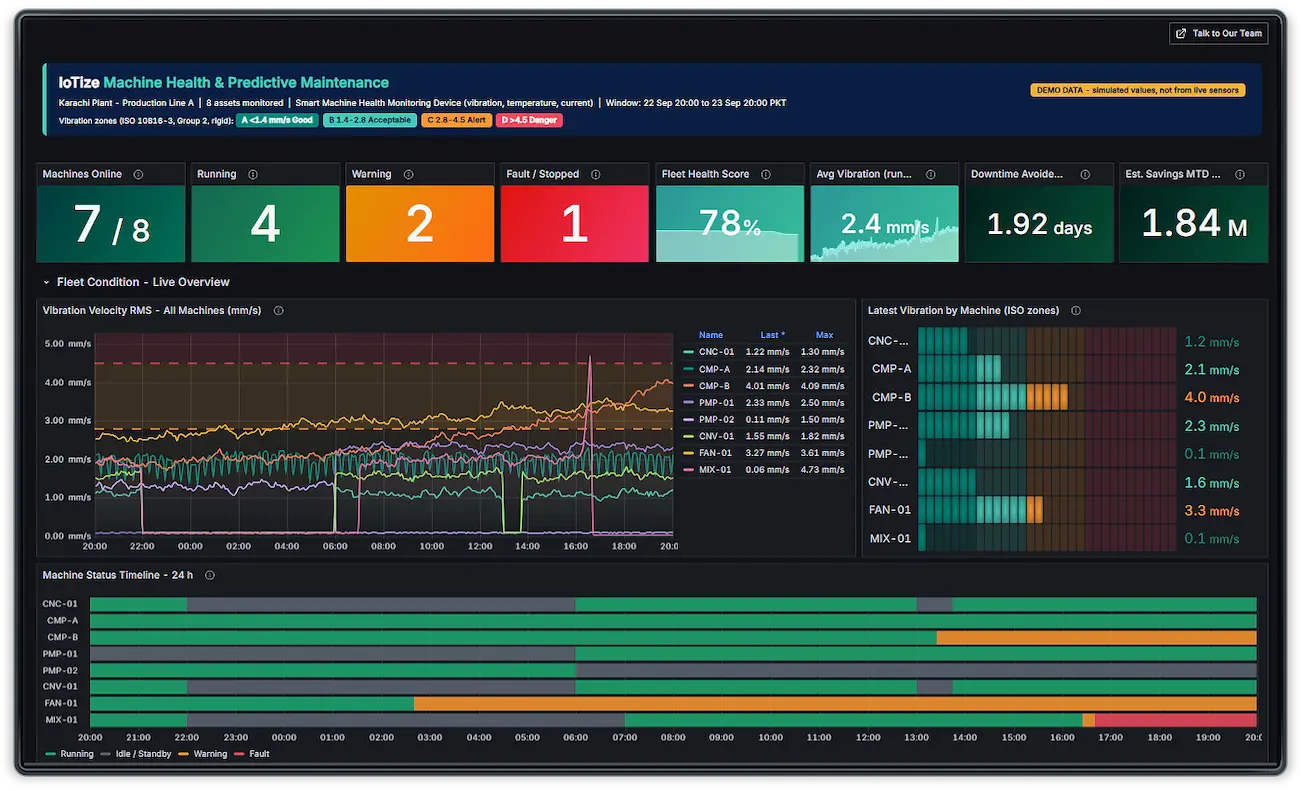
This solution is just one piece. The IoTize Platform brings every connected device together, so you can monitor, analyse and act on live data from a single place.
- Real-time dashboards and instant alerts
- Health, energy and production data side by side
- Access from any browser, on any device
Stop guessing when your machines will fail
Catch the early warning, act before the breakdown, and keep your most important machines running with IoTize predictive maintenance. Start with one machine. Your data stays yours.
Predictive maintenance: frequently asked questions
What is the difference between predictive and preventive maintenance?
Preventive maintenance services a machine on a fixed schedule whether it needs it or not. Predictive maintenance watches the machine’s real condition, vibration, temperature, and current, and only acts when the data shows a developing fault. That means less unplanned downtime and fewer unnecessary part swaps.
Do I need a separate gateway to use these devices?
No. The predictive maintenance devices stream directly over Wi-Fi, and Ethernet on the enterprise node, using MQTT and HTTP, so there is no extra gateway to buy.
Will this work on my old or legacy machines?
Yes. The sensors are non-invasive and bolt or clamp onto existing equipment without rewiring, so you can retrofit predictive maintenance onto older machines without replacing them.
Can I keep all my data on-premises?
Yes. You can run on-premise predictive maintenance on your own local server or private cloud, so machine data never leaves your network. IoTize SaaS is optional.
Does this integrate with my SCADA or MES?
The Enterprise Smart Machine Health Monitor (SMH-100) speaks Modbus TCP alongside MQTT and HTTP, so it connects directly into SCADA, MES, and ERP systems. The other devices integrate via MQTT and HTTP.
What is the difference between the single-signal devices and the combo monitors?
The Current, Temperature, and Vibration devices each watch one signal, ideal when you know the specific risk on a machine. The Smart Machine Health Monitor and the SMH-100 watch vibration, temperature, and current together for full machine health monitoring.
How many machines do I have to start with?
Just one. Start with your most critical machine, prove the reduced downtime, then add units as you scale.
Wi-Fi or Ethernet, which do the devices use?
The affordable temperature and machine-health monitors use Wi-Fi. The enterprise devices support Ethernet and Modbus TCP for reliable plant-network and SCADA integration.
Explore more
Products: Current Monitor (single-phase) · Machine Temperature Monitor · Vibration Monitoring Device · Smart Machine Health Monitor · Enterprise SMH-100
Blogs: Visit the IoTize blog →