

Technical Reviewer: Zia ur Rehman
15+ years in embedded systems and industrial IoT · Reviewed
Fuel prices keep climbing, electric cars and bikes keep arriving on Pakistani roads, and yet many cities still have too few convenient places to plug in. That infrastructure gap creates an opening for an EV charging business in Pakistan, but only when the site, power supply, charger mix, and operating model fit together.
This practical 2026 guide walks through the decisions in order: whether the opportunity is worth pursuing, how the business makes money, where to place chargers, what AC and DC hardware suits each site, which approvals matter, how to estimate cost, and which software turns charging equipment into a business you can operate and grow.
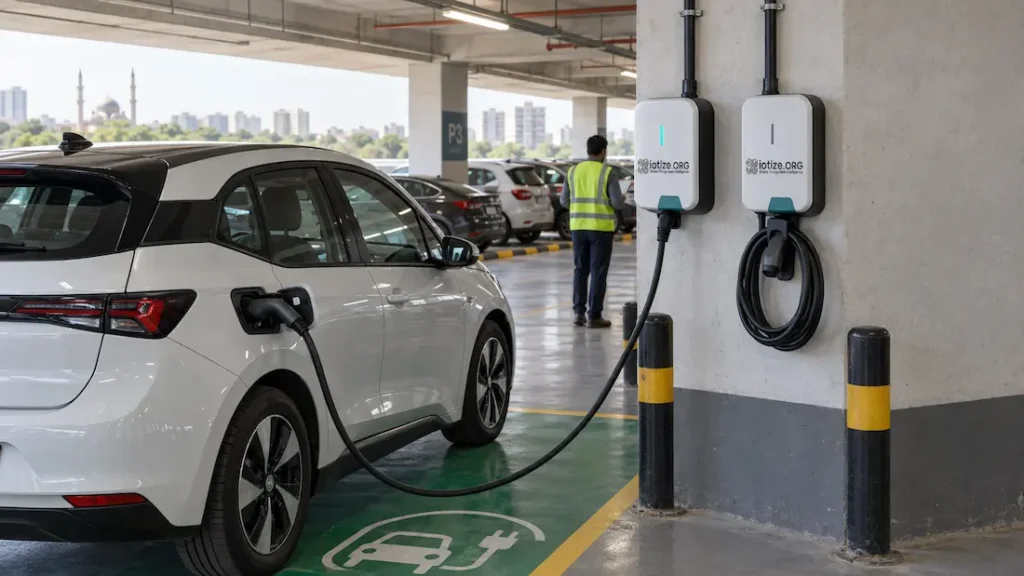
To start an EV charging business in Pakistan, you need five things: a strong site, the right AC or DC charger, an approved grid connection, compliant installation and registration, and a charging management platform.
Utilisation decides the result. Pakistan’s official NEV Policy 2025-30 states a commercial charging tariff of PKR 39.70 per kWh and targets 3,000 charging stations by 2030.
A low tariff does not rescue a weak site. Therefore, validate demand before buying expensive hardware.
Is an EV charging business in Pakistan worth it in 2026?
Yes, for the right site and operating model. Pakistan’s NEV Policy 2025-30 targets 30 percent of new vehicle sales to be new-energy vehicles by 2030. It also sets ambitions of 50 percent by 2040 and 100 percent by 2050. Therefore, policy now gives charging infrastructure a clear direction.
In addition, the policy calls for 40 Level 3 fast-charging sites in its first phase and a gradual rollout of 3,000 charging stations by 2030. Those numbers are targets rather than guaranteed demand. Still, they show that government planning expects a much larger charging network than Pakistan has today.
Ultimately, the opportunity comes from being early at a good site, not simply from owning a charger. A mall, office, fuel station, hotel, parking plaza, or fleet depot can work, but each location needs a different charger mix and revenue plan.
How does an EV charging business make money?
An EV charging operator earns revenue by selling charging sessions, usually per kWh, per minute, per session, or through a membership plan. However, the gross spread between electricity cost and the retail charging price is only the starting point. Rent, revenue share, maintenance, payment fees, downtime, and software costs all reduce the final margin.
There is also a strategic ownership choice. With white-label charging software, you own the charger and customer relationship while licensing the operational platform.
By contrast, when you join a network, another brand may control the driver relationship. With Charging as a Service, a third party can own and operate the hardware while you mainly provide the site.
For an independent operator, the platform model offers the most control because you keep the asset, brand, pricing, customer, and data. However, it also means you carry the hardware investment and operating responsibility.
Where should you put an EV charger?
Site selection decides the business before a cable is installed. Look for vehicle flow, useful dwell time, safe access, visibility, and enough electrical capacity for the charger mix you want.
- Shopping malls and retail plazas: Drivers stay for an hour or more, which suits AC charging and can support customer-attraction campaigns.
- Office towers and corporate campuses: Predictable weekday dwell time creates a captive group of commuters and fleet vehicles.
- Fuel stations and highway service areas: Transit traffic suits DC fast charging because drivers value speed more than dwell time.
- Parking plazas and hotels: Existing parking controls and long stays make access and billing simpler.
- Fleet and ride-hailing depots: Scheduled vehicles and predictable energy demand can create more stable utilisation than purely public sites.
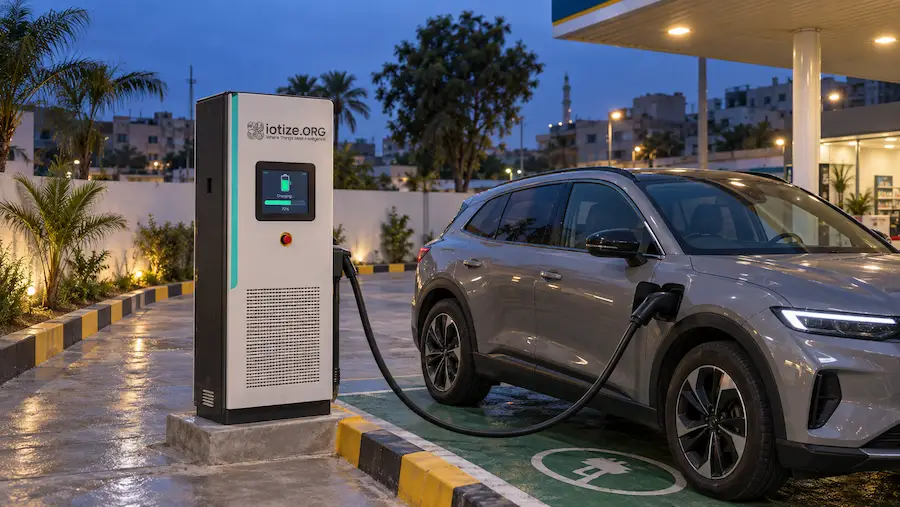
Match the charger to the dwell time. Where people stay, AC charging can be enough. Where people pass through, DC fast charging can justify its higher cost through faster turnover.
AC or DC: which EV chargers should you buy?
The charger should follow the site, not the other way around. AC chargers cost less and suit long dwell times, while DC chargers cost far more but serve drivers quickly. Ask suppliers for current written quotations because imported equipment prices, duties, warranties, and installation packages change quickly.
| Charger type | Typical power | Best fit | Business trade-off |
|---|---|---|---|
| AC wallbox | 7 to 22 kW | Malls, offices, hotels | Lower entry cost, slower turnover |
| DC fast charger | 50 to 150 kW | Highways, fuel stations, busy hubs | Higher cost, faster turnover |
| High-power DC | Above 150 kW | Premium corridors and fleets | Highest hardware and grid cost |
Most public EV charging listings in Pakistan show CCS2 and CHAdeMO for DC, Type 2 for AC, and some GB/T support. Therefore, confirm the actual vehicles you expect before ordering connectors.
A practical first site may start with one or two AC units at a high-dwell property. Then, if utilisation data supports the investment and the grid can handle it, the operator can add DC charging.
What do Pakistan’s grid and EV charging tariff allow?
Pakistan’s official NEV Policy 2025-30 states a commercial EV charging tariff of PKR 39.70 per kWh. The Power Division also describes this as a reduction from about PKR 71 per unit.
Therefore, use PKR 39.70 as a policy reference. However, confirm the billed rate, taxes, connection category, and current notification with the relevant DISCO before you model returns.
Grid capacity matters just as much as the tariff. One AC wallbox may fit within an existing commercial connection. However, several chargers or a DC fast charger may require three-phase supply, a load upgrade, or a transformer. Smart charging and load balancing can help a site stay within its sanctioned capacity.
The policy also says DISCOs should process new charging-station connections within three weeks and integrate charging stations with smart metering. In practice, project schedules can vary, so start the DISCO discussion before ordering hardware.
Pakistan’s official EV charging direction
Source: Government of Pakistan, NEV Policy 2025-30. Policy targets and tariffs can change.
What permits and approvals do you need?
Start with NEECA and the relevant DISCO before committing civil work. Pakistan’s registration process and technical rules can change, so use the live regulator route instead of relying on an old checklist.
- NEECA registration and compliance: Submit the charging-infrastructure registration through NEECA’s current application route and follow its EVCI and battery-swapping regulations.
- DISCO connection approval: Confirm the commercial connection, sanctioned load, metering, and any transformer or three-phase upgrade.
- Qualified electrical design and installation: Use appropriately licensed electrical professionals and follow Pakistan Engineering Council requirements, equipment standards, earthing, protection, signage, and fire-safety rules.
- Site and local approvals: Confirm landlord consent, parking permissions, building-control requirements, and any provincial or municipal approvals that apply to the specific site.
- Commercial setup: Put the tariff, payment gateway, receipts, customer terms, and maintenance response into the operating plan before launch.
For current registration guidance, use the NEECA EVCI and BSS information and confirm the required documents directly with the regulator.
What does an EV charging station cost to set up?
There is no single setup price because hardware, grid work, site conditions, and the operating model drive the total. Current Pakistani supplier and marketplace listings vary widely, so compare written quotations on the same connector, power, warranty, OCPP version, enclosure rating, and installation scope.
- Hardware capital: AC wallbox or DC fast charger, pedestals, cables, connector options, protective equipment, and spare parts.
- Electrical and civil work: Distribution boards, earthing, cable runs, trenching, foundations, barriers, signage, lighting, and commissioning.
- Grid cost: New connection, load enhancement, three-phase supply, smart meter, or transformer work where required.
- Software and payments: Platform setup, branding, per-charger licence, payment-gateway integration, SIM or connectivity, and support.
- Ongoing operation: Electricity, rent or site revenue share, payment fees, maintenance, insurance, support, and downtime.
Build three cases before investing: a cautious utilisation case, a realistic case, and a high-demand case. Then calculate revenue per delivered kWh and subtract every operating cost. Do not treat the difference between the policy tariff and a public retail price as net profit.
What software do you need to run an EV charging station?
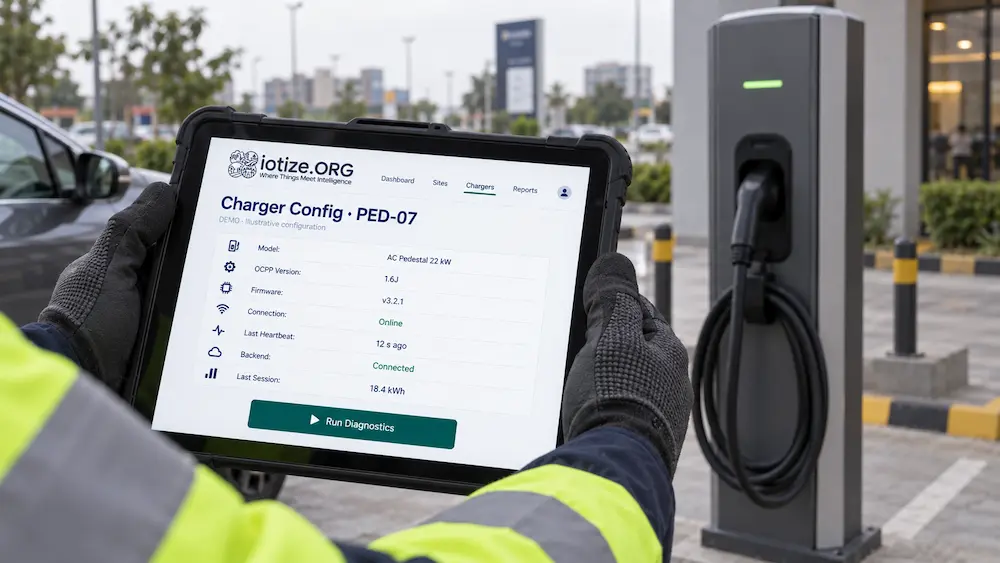
A charger is hardware. Charging management software turns it into an operating business by authenticating drivers, starting and stopping sessions, recording energy, applying tariffs, taking payments, showing live status, and reporting faults.
IoTize’s white-label EV charging software provides that layer under the operator’s own brand. The live solution page confirms these capabilities:
- Open protocol support: OCPP 1.6 and OCPP 2.0.1 support reduces dependence on one charger maker.
- Mixed AC and DC fleet: Hardware-agnostic management brings compatible charger brands into one dashboard.
- Driver and operator experiences: A branded driver app and web portal sit alongside the operator back office and role-based host access.
- Smart charging and load management: The platform balances demand and helps the site stay inside its available electrical capacity.
- Local payment integration: The operator connects local payment rails and keeps the customer relationship and revenue flow.
- Flexible deployment: Managed cloud is the normal route, while private cloud or on-premise can support enterprise requirements.
The strategic decision is whether you want to own the charger and brand, join another network, or use Charging as a Service. Next Blog will compare those three models directly.
How do you actually launch an EV charging business?
- Secure a site: Choose a high-dwell or high-traffic location, estimate demand, and agree the lease or revenue share.
- Choose the charger mix: Match AC or DC power to expected dwell time, vehicles, connector demand, and the site’s business case.
- Confirm the grid: Ask the DISCO about sanctioned load, metering, three-phase supply, and transformer needs before placing a hardware order.
- Get approvals: Complete NEECA registration, site permissions, compliant design, installation, and safety checks.
- Choose software and payments: Connect an OCPP-capable platform, set roles and tariffs, integrate payments, and test complete sessions.
- Launch and learn: Monitor uptime, sessions, energy, payment success, and utilisation. Add chargers or sites only when the data supports expansion.
Key takeaways
- Policy supports charging growth: Pakistan targets 30 percent new-energy vehicle sales by 2030 and a phased network of 3,000 charging stations.
- Site utilisation matters most: A visible, accessible site with the right dwell time matters more than buying the cheapest charger.
- AC and DC serve different jobs: Use AC for dwell and DC for transit or fleet turnover.
- Grid work can change the project: Confirm load, connection, metering, and transformer needs before ordering hardware.
- Compliance starts early: Work with NEECA, the relevant DISCO, qualified electrical professionals, and local authorities.
- Software creates the operating layer: OCPP connectivity, billing, payments, monitoring, and load management turn equipment into a scalable business.
Plan the software before you buy the chargers
Bring your proposed sites, charger list, and payment requirements. IoTize can map the OCPP, dashboard, app, billing, and load-management layer under your brand.
Frequently asked questions
How much does it cost to start an EV charging business in Pakistan?
There is no reliable single figure. The total depends on AC or DC hardware, power level, connector mix, imported-equipment pricing, civil and electrical work, grid upgrades, software, payments, and site rent. Therefore, compare current written quotations and model three utilisation cases before investing.
Is an EV charging business profitable in Pakistan?
It can be, but utilisation and site economics decide the result. The policy tariff of PKR 39.70 per kWh creates a useful starting point, yet rent, maintenance, payment fees, downtime, software, taxes, and financing all reduce the gross spread.
What is the electricity tariff for EV charging stations in Pakistan?
Pakistan’s NEV Policy 2025-30 states a commercial charging-station tariff of PKR 39.70 per kWh. However, confirm the current billed rate, tax treatment, category, and connection terms with the relevant DISCO before using it in a financial model.
Do I need a licence to open an EV charging station in Pakistan?
You need to follow the current NEECA registration and compliance route, secure the relevant DISCO approval, and complete safe electrical installation and any site-specific permissions. Because procedures can change, confirm the document list and fees through NEECA and your DISCO before construction.
Is an AC or DC charger better for my site?
Match the charger to dwell time and demand. AC charging suits malls, offices, hotels, and other places where vehicles already stay. DC fast charging suits highways, fuel stations, busy hubs, and fleets where quick turnover can justify the higher hardware and grid cost.
Can I use my own charger brand with white-label software?
Yes, when the charger and platform use compatible open protocols. IoTize supports OCPP 1.6 and OCPP 2.0.1 and is hardware-agnostic, so an operator can run compliant chargers from different makers while keeping its own brand, pricing, customer relationship, and data.
EV charging platform: White Label EV Charging Software
Read next: White Label vs Joining a Network vs Charging as a Service
Platform: IoTize IoT Platform
More guides: Visit the IoTize blog