
Custom IoT Solutions: Hardware Designed and Built in Pakistan
When the device you need does not exist, or the imported one keeps failing, we design and build it. IoTize.ORG develops the PCB, firmware, dashboards and cloud software in-house in Pakistan, and handles assembly and production.
Designed and built in Pakistan since 2015 · Open protocols · No lock-in
Quick answer: Custom IoT solutions are connected devices and software designed for a specific job. IoTize.ORG, an industrial IoT company in Karachi, Pakistan, handles PCB design, firmware, connectivity, dashboards and production. Based on IoTize.ORG projects, a prototype typically takes 3 to 6 months. There is no minimum order for solution design.
We have built devices for car parks in the Gulf, dental labs, a UK patrol boat operator and textile units in Lahore. Tell us what the device must do and where it will run. Our engineers will work out how to capture the data you need and get it to the people or systems that use it.
Key facts
- Company: IoTize.ORG has designed and built industrial IoT devices in Karachi, Pakistan, since 2015.
- In-house work: PCB design, embedded firmware, dashboards, cloud, assembly and production.
- Typical timelines from IoTize.ORG projects: 3 to 6 months for a prototype and about a year from project start to production.
- Order size: No minimum order for solution design. Production runs have a minimum order quantity.
- Data options: IoTize Cloud, your own cloud or an on-premises server with no internet connection.
- Where our devices run: Pakistan, the UK and the Gulf.
When off-the-shelf is not enough
Most monitoring jobs fit a standard device. A custom build is worth considering when site conditions, replacement parts or integration needs make a catalogue device hard to use or support.
- The imported device fails in local conditions. Heat, dust or unstable power causes it to hang, and each fault means a service call.
- The imported product costs too much to own. Shipping, spare parts and overseas support add to the purchase price.
- Nothing on the market does the exact job. The machine, vehicle or site needs a specific mix of sensors, outputs and logic.
- The data is locked away. The vendor’s device sends data only to its own cloud, so your systems cannot use it.
- The supplier has discontinued the device. Your operation still depends on it, and parts or replacements are hard to find.
When those problems recur, compare the cost of a locally designed replacement with what you already spend on downtime, freight and repairs.
What are custom IoT solutions?
Custom IoT solutions combine a device and its software around one specific job. The hardware collects the signals, firmware processes them, a network carries the data and a dashboard or control system puts it to work.
Your machine or site
machine, vehicle, panel, car park
1 Sense
sensors and machine inputs
2 Process
custom PCB, firmware, edge rules
3 Connect
Wi-Fi, Ethernet, RS485, GSM / 4G, CAN bus
4 Show and act
dashboards, alerts, your own systems
The right development route depends on how closely an existing design fits the job.
| Route | What it means | Typical example |
|---|---|---|
| Configure | Set up an existing IoTize device with the inputs, alerts and dashboard your site needs. | Connect a production counter to a machine’s existing encoder. |
| Adapt | Change an existing IoTize design in hardware or firmware. | Add a protocol, sensor or output to a gateway. |
| Build new | Design a new device around the job. | A dental sintering furnace or a solar flip-dot parking sign. |
What does IoTize.ORG design and build in-house?
Our team in Pakistan handles the design from the circuit board to the dashboard, along with assembly, testing and production. The same engineers can trace a field issue across the hardware, firmware and software.
| Capability | What it covers |
|---|---|
| PCB design | Schematics, component selection and board layout for industrial conditions |
| Embedded firmware | Device logic, sensor readings, edge rules, offline buffering and alerts |
| Connectivity | Wi-Fi, Ethernet, RS485 / Modbus, GSM / 4G and CAN bus (J1939 and NMEA 2000) |
| Edge computing | Local rules that keep running on the device or gateway when internet access drops |
| Dashboards | Live data, reports and alerts configured for each device and user role |
| Cloud | IoTize Cloud, your own cloud or a fully on-premises server |
| Assembly and production | In-house assembly, testing and production runs |
Custom IoT projects we have delivered
These projects cover parking guidance, lab equipment, marine monitoring and textile production. Several other projects are confidential under NDA.
Smart Parking guidance for Gulf heat
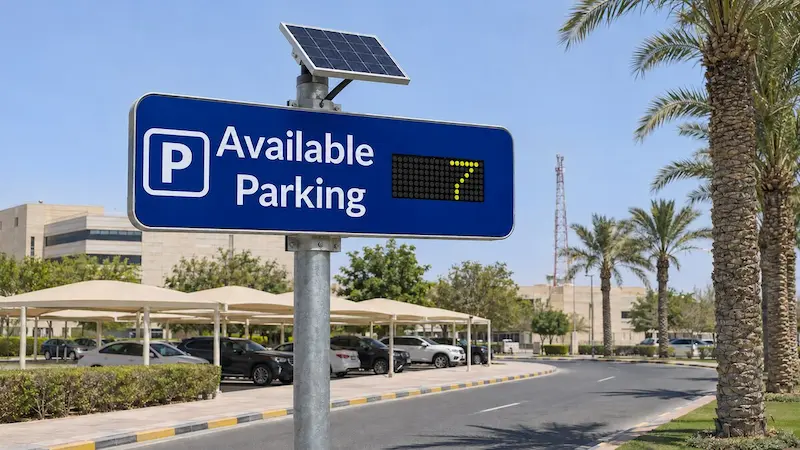
The problem: Guidance signs at car parks in the Gulf kept hanging in high temperatures, leaving operators with repeated maintenance call-outs.
What we built: A parking guidance system with four devices for vehicle counting, local control and indoor and outdoor signage.
- The IoT Entry/Exit Vehicle Counter (VC-100) counts vehicles entering and leaving each lane.
- The Parking Guidance Gateway (PGW-100) runs the rules locally and keeps signs operating if internet access drops.
- The IoT Indoor LED Signage Display guides drivers on covered levels.
- The Smart Parking Flip-Dot Guidance Signage uses solar and battery power outdoors. Its discs hold the displayed image without continuous power.
See how the system fits together on our Smart Parking page.
Smart dental sintering furnace built in Pakistan
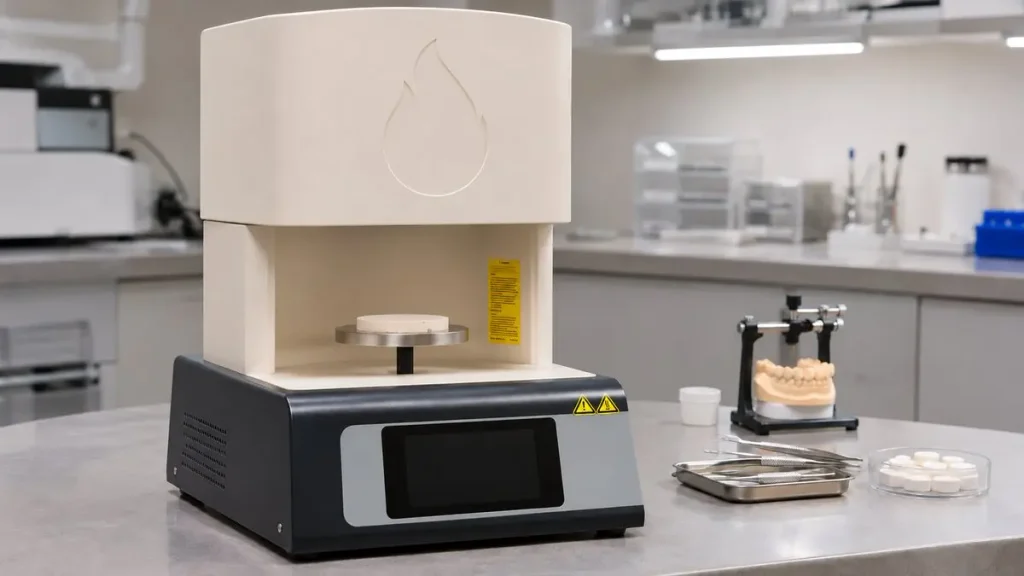
The problem: Dental labs relying on imported furnaces for zirconia and porcelain restorations face high equipment and shipping costs, with spares and support overseas.
What we built: The Smart IoT-Enabled Dental Sintering Furnace has an automatic lift and touchscreen control. We design and build it in Pakistan and provide local support. The IoTize.ORG store lists it from $2,999.
Marine engine and navigation gateway for a UK patrol boat
The problem: A UK patrol boat operator had high fuel use and limited visibility into how its crews ran the engines.
What we built: The Smart Marine Engine & Navigation CAN Bus Gateway reads engine data over J1939 and navigation data over NMEA 2000. It sends the data over 4G to the client’s cloud dashboards.
The result: The data showed that high engine RPM was wasting fuel. The operator used over-revving, idle time and fuel per nautical mile to brief crews. Fuel use and maintenance fell, and the operator ordered more devices. Read the marine case study.
How does IoT product development work, from idea to production?
The same IoTize.ORG engineers work with you from the first brief through production and support.
1 Brief
problem, site, units
2 Feasibility
configure, adapt or build
3 Design
PCB, firmware, dashboard
4 Prototype
assembled, bench-tested
5 Field test
runs at your site
6 Production
assembled and tested in-house
7 Support
updates, spares, changes
- Brief. Tell us about the problem, the site and what the device must do. A call or WhatsApp message is enough to start.
- Feasibility and proposal. Our engineers check whether we can configure or adapt an existing device and scope any new design work. You get a proposal.
- Design. We design the PCB, firmware and dashboard together.
- Prototype. We assemble and bench-test working units.
- Field test. The prototype runs at your site. We use the data to refine the design.
- Production. Once the design passes field testing, we assemble and test the production units in-house.
- Support. The design team handles firmware updates, dashboard changes and spares.
How long does custom IoT development take?
In IoTize.ORG projects, a custom prototype typically takes 3 to 6 months, and reaching production usually takes about a year from project start. Configuring an existing device is usually the shortest route.
| Stage | Typical time in IoTize.ORG projects | Order quantity |
|---|---|---|
| Configure an existing device | Shortest route, with timing quoted per project | Any quantity |
| Prototype a new device | 3 to 6 months, depending on complexity | No minimum order for solution design |
| Reach production from project start | About a year | Minimum order quantity applies to production runs and varies by device |
Product complexity, certification requirements and changes to the brief can extend these timelines.
How much does a custom IoT device cost?
We quote custom IoT development after the feasibility check, once we know what the device needs to do. As examples of product pricing, the IoTize.ORG store lists the vehicle counter from $249 per unit and the dental furnace from $2,999 per unit.
- New design work. Configuring an existing device takes less design work than developing a PCB and firmware from scratch.
- Sensors and outputs. The quote reflects the inputs and what the device drives, such as displays, motors or heaters.
- Connectivity. The network affects the hardware and integration needed, especially with 4G, CAN bus or multiple networks.
- Environment. Heat, dust, water and vibration can require tougher parts and more testing.
- Software. Custom screens, reports and ERP integrations add work beyond a standard dashboard.
- Volume. Higher production quantities can reduce unit costs.
- Certification. Any certification your market requires adds time and cost.
Is custom right for you? (60-second check)
1. Does an IoTize device already measure what you need?
Think about vibration, temperature, energy, production counts, RPM, vehicle counts or CAN bus data. Open the answer that fits.
Yes
2. Do you only need different alerts, inputs or a dashboard for your site?
Yes, the device hardware already fits
Configure an existing device. This is usually the quickest and lowest-cost route. Browse our devices or Talk to Our Team.
No, the hardware itself needs to change
Adapt an IoTize design. We can assess what it would take to modify the hardware or firmware of an existing device. Talk to Our Team.
No, or I am not sure
3. Are you replacing imported equipment or building a device for a new job?
Replacing imported equipment
Build a local replacement. Send us the existing model and the problem you need solved. Talk to Our Team.
Building a device for a new job
Start with a new design. We will assess feasibility, scope the prototype and explain the production requirements. There is no minimum order for design. Talk to Our Team.
What to send us for a faster answer
- What the device must measure or control
- Where it will run and what conditions it will face, such as heat, dust, outdoor exposure or vehicle use
- How it should connect, such as Wi-Fi, Ethernet, RS485, 4G, CAN bus or a local network without internet
- How many units you expect to need in the first year
- The model name and photos of any device it needs to replace
Local design vs imported equipment
| Consideration | IoTize.ORG custom device | Imported catalogue device |
|---|---|---|
| Site conditions | Design can account for local heat, dust and power conditions. | Check the published limits against your site conditions. |
| Total cost | Locally built device with no import freight on delivery within Pakistan. | Allow for product price, shipping, duties and lead time. |
| Changes | The same team can change hardware, firmware and dashboards. | Changes depend on the manufacturer and product options. |
| Support and spares | Support comes from the engineers who designed the device. | Check local service coverage and spare-part availability. |
| Data | IoTize Cloud, your cloud or on-premises deployment with open protocols. | Check data access, supported protocols and cloud requirements. |
| Order size | No minimum order for design. A minimum applies to production. | Pack sizes and minimum quantities depend on the supplier. |
Pakistan’s proposed mobile and electronics manufacturing policy for 2026 to 2033 aims to expand domestic manufacturing and exports, according to Profit by Pakistan Today. For buyers considering local manufacturing, ask who can change the design, test it at the site and support it after installation.
An imported product can still be the right choice when a certified model already meets your requirements. We can assess that option during feasibility.
Who owns the data, the design and the NDA?
Your data. Deployment options include IoTize Cloud, your own cloud or an on-premises server with no internet access. Open protocols such as MQTT, HTTP and Modbus TCP let you connect to systems such as SCADA, MES or ERP, depending on the device and integration. See the IoTize IoT Platform for dashboard, alert and deployment options.
Design ownership. We agree on intellectual property ownership with each client for each project. The terms depend on the device and client.
Confidentiality. We work under NDA when a client needs it. Several custom projects stay confidential under those agreements.
Network and power interruptions. Our monitoring devices buffer data during network outages and send it once the connection returns. Monitoring devices without an internal battery report the power interruption and its duration after power returns. Designs that need their own power, such as the solar flip-dot sign, can include battery backup.
Industries we work with
- Textiles and embroidery: Production counts, RPM and runtime on looms and multi-head machines.
- Manufacturing: Machine health, energy and production monitoring on legacy and new equipment.
- Marine: Engine and navigation data over J1939 and NMEA 2000.
- Smart Parking: Vehicle counting, edge gateways and guidance signage.
- Dental and lab equipment: Connected equipment such as the sintering furnace.
- Environment and control: Environmental monitoring and custom control devices.
Our devices run across Pakistan, as well as in the UK and Gulf markets.
Why IoTize.ORG
- One engineering team. We handle PCB design, firmware, dashboards, cloud, assembly and production in-house.
- Devices you can see before scoping a project. Browse the Custom Series for examples and starting prices.
- Designs shaped by field conditions. Our projects include signage for Gulf heat, factory monitoring and data logging aboard vessels.
- Control of your data. Choose IoTize Cloud, your own cloud or an on-premises deployment, with open protocols.
- A route that fits the job. We tell you whether to configure, adapt or build, and there is no minimum order for solution design.
- Designed and built in Pakistan since 2015. IoTize.ORG devices operate in Pakistan, the UK and the Gulf.
Frequently asked questions about custom IoT solutions
What are custom IoT solutions?
Custom IoT solutions are connected devices and software designed for a specific job. A custom solution usually includes the circuit board, firmware, connectivity and the dashboard that shows the data. IoTize.ORG designs all of these layers in-house.
What is the difference between custom and off-the-shelf IoT?
An off-the-shelf device covers common jobs and is usually quicker and cheaper to deploy. A custom device fits your exact inputs, outputs, environment and data needs. Some projects use an existing IoTize device with configuration or design changes.
Do you design custom IoT hardware in Pakistan?
Yes. IoTize.ORG designs and builds custom IoT hardware in Karachi, Pakistan, including PCB design, firmware, dashboards, cloud, assembly and production. Our devices run in Pakistan, the UK and the Gulf.
How long does a custom IoT prototype take?
In IoTize.ORG projects, a prototype typically takes 3 to 6 months, depending on complexity. Moving from project start to production usually takes about a year. Configuring an existing IoTize device is normally much faster.
How much does it cost to build a custom IoT device?
We quote each project after a feasibility check. The quote depends on how much design work is new, the sensors and outputs, connectivity, the environment, software and production volume. For reference, the IoTize.ORG store lists the vehicle counter from $249 and the dental furnace from $2,999 per unit.
Is there a minimum order quantity?
There is no minimum order for solution design. A minimum order quantity applies only to production runs and varies by device.
Do I own the design?
We agree on design ownership with each client for each project. The terms depend on the client and the device.
Do you sign an NDA?
Yes, we work under NDA when a client needs it. Several of our custom projects stay confidential under those agreements.
Can you replace an imported device that keeps failing or is no longer made?
Often, yes. Our parking guidance system replaced signs that kept hanging in Gulf heat, and we designed our dental sintering furnace as a local alternative to imported furnaces. Send us the model name and photos, and we will tell you what is possible.
Can a custom IoT device work without internet?
Yes. A device can run fully on-premises with a local server, and edge rules can run on the device or gateway. Monitoring devices can buffer readings during a network outage and send them when the connection returns. Connectivity options depend on the design and include Wi-Fi, Ethernet, RS485, GSM / 4G and CAN bus.
Do you work with clients outside Pakistan?
Yes. Our devices run in the UK and the Gulf as well as across Pakistan.
How do I start a custom IoT project?
Send a short brief through our contact page or on WhatsApp. Include what the device must do, where it will run and how many units you expect to need. Our engineers will recommend a standard device, an adaptation or a new design.
Start your project
Send us the job the device needs to do, your site conditions and the model of any device you need to replace. We will tell you which route fits and give you an idea of the timeline.
Explore more
- Custom Series for examples of custom hardware.
- IoT Platform for dashboards, alerts and deployment options.
- Smart Parking for vehicle counting and parking guidance.
- Production Monitoring for production counts, runtime and machine speeds.
- Predictive Maintenance for machine health monitoring.
- Case Studies for field installations.
- All Products to compare available devices.
Tell us what the device needs to do
Our engineers can help you choose between an existing device and a custom IoT solution for your site.
Talk to Our Team