

Technical Reviewer: Zia ur Rehman
15+ years in embedded systems and industrial IoT · Reviewed
Every unplanned machine breakdown costs a manufacturer far more than the repair itself. It stalls production, pulls maintenance teams into firefighting, scraps in progress batches, and quietly erodes margins, usually with no warning at all. Predictive maintenance exists to remove that surprise.
In this guide you will get a clear predictive maintenance definition, see exactly how predictive maintenance works on a real factory floor, understand where it sits among the other types of maintenance, and walk away knowing whether it belongs in your plant.
Predictive Maintenance Definition and Meaning
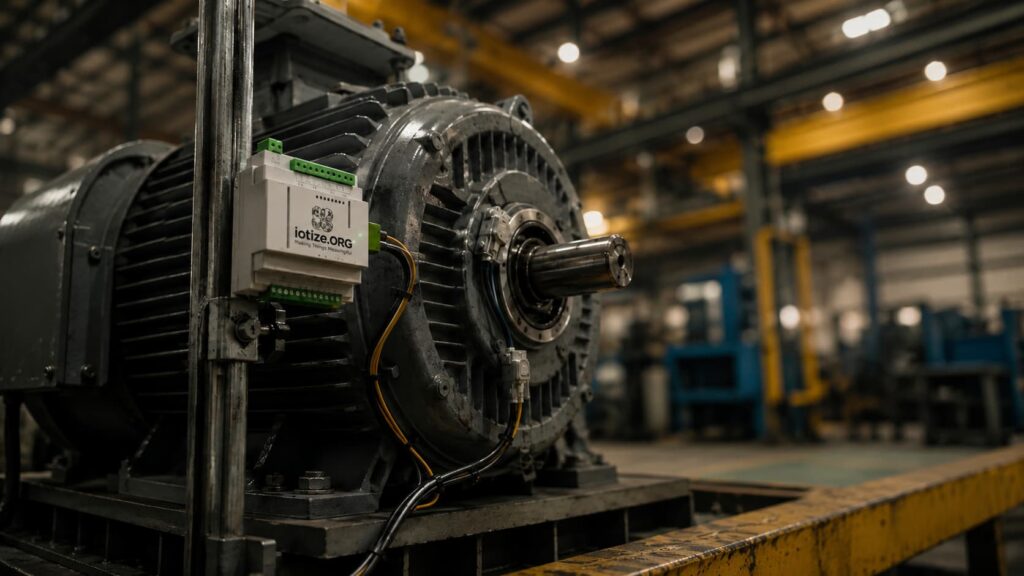
Predictive maintenance, often shortened to PdM, is a proactive maintenance strategy that uses real time data from sensors on your equipment to predict when a machine is likely to fail, so the repair can be scheduled just before failure instead of after it.
The predictive maintenance meaning is exactly what the words suggest. You do not service a machine on a fixed calendar, and you do not wait for it to break. You act when the data says the machine needs attention.
At its core, predictive maintenance answers one question for every critical asset you own: is this machine going to fail soon, and if so, when?
How Does Predictive Maintenance Work?
Predictive maintenance works by continuously measuring the physical signals a running machine gives off, things like vibration, temperature, current draw, oil condition, and acoustic emissions, then comparing those readings against a healthy baseline to catch the patterns that come before a failure. A worn bearing is the classic example. Long before it seizes it produces vibration at frequencies that differ slightly from normal running, and a predictive maintenance system sees that shift early.
The Predictive Maintenance Process Step by Step
According to IBM’s predictive maintenance framework, the process generally follows these stages:
- Data Collection: Sensors attached to or near equipment continuously capture operational data (vibration, temperature, current, pressure, RPM, oil condition).
- Baseline Determination: Healthy operating ranges are established for each asset so deviations can be measured against a known-good state.
- Data Analysis: Algorithms, whether rules-based, statistical, or machine learning models, process the data and compare it to known failure signatures.
- Anomaly Detection: When readings deviate from baseline beyond defined thresholds, the system triggers an alert.
- Task Automation: Maintenance teams receive the alert with context (which machine, what reading, severity), and the system can automatically generate and schedule work orders.
This predictive maintenance process never stops. It runs 24 hours a day across every monitored asset, which is something no manual inspection round can match.
Predictive Maintenance Technology: The Sensors Behind It
Predictive maintenance is only as good as the data it collects, so the sensor layer is where everything begins. The most common predictive maintenance sensors map to the five established types of analysis.
- Vibration sensors detect bearing wear, imbalance, misalignment, looseness, and resonance in rotating machinery, and give the earliest warning on motors, pumps, fans, and gearboxes. Our guide on how IoT vibration sensors detect motor failures explains each fault signature in detail.
- Temperature sensors catch overheating in motors, bearings, drives, and connections. Machine temperature monitoring is the most affordable place to start, and it pairs powerfully with vibration: when both rise together you can pinpoint a fault with far more confidence.
- Current and power sensors measure electrical load changes that reveal mechanical degradation, motor overload, and efficiency drift, often weeks before any mechanical symptom appears.
- Oil analysis inspects lubricant for wear particles and contamination, a proven early indicator of internal wear in gearboxes, engines, and hydraulic systems.
- Acoustic and ultrasonic sensors pick up the high frequency signals of micro cracking, friction, cavitation, and pressurized leaks before vibration registers anything.
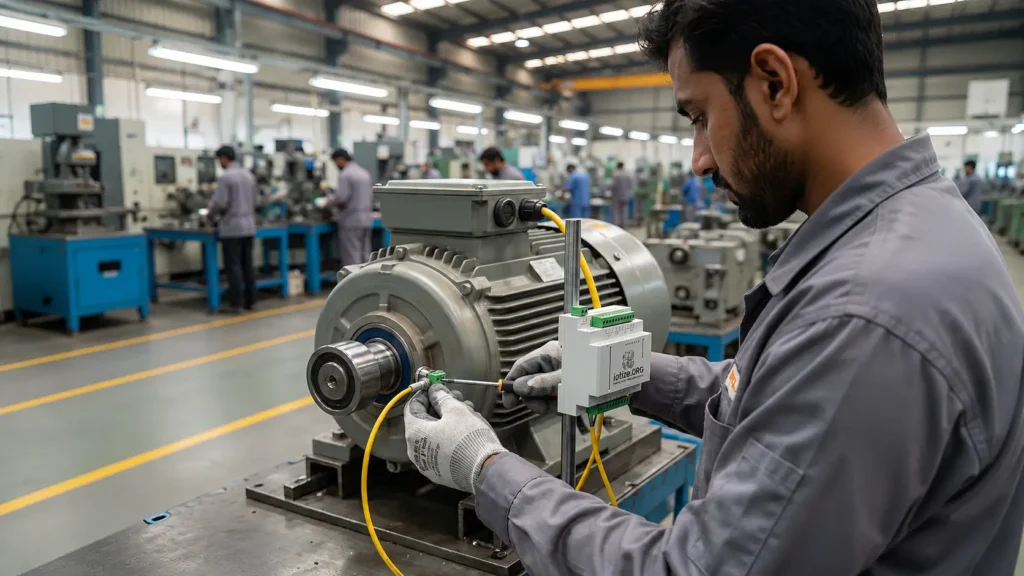
This is where IoTize hardware does the heavy lifting. The Enterprise IoT Vibration Monitoring Device captures RMS, peak, and FFT vibration data from rotating machinery and streams it over HTTP, MQTT, or Modbus TCP, so teams see bearing and motor health continuously without a single inspection round.
For thermal faults, the Smart Machine Temperature Monitor keeps a constant eye on motor and bearing temperature and alerts the moment a reading climbs out of its normal band. On the electrical side, the Single Phase Energy Monitoring Sensor tracks current, voltage, power, and power factor at the machine level, surfacing the overload and efficiency drift that often precede a failure.
AI and Machine Learning in Predictive Maintenance
Modern AI predictive maintenance goes well beyond simple threshold alarms. Predictive maintenance machine learning models train on historical data to recognise complex fault patterns, estimate the remaining useful life of a component, and separate normal variation from genuine degradation, getting more accurate as more data arrives.
For sites that want this intelligence without building a data science team, the Enterprise Smart Machine Health Monitor brings dual point vibration, temperature, and current monitoring with condition based logic into a single device, so the early warning lives at the machine rather than in a spreadsheet
Types of Maintenance: Where Does Predictive Fit?
To understand predictive maintenance fully, it helps to see it beside the other types of maintenance. Most plants run a mix of all four, and the goal is to put each asset on the right one.
| Reactive | Preventive | Condition based | Predictive | |
|---|---|---|---|---|
| Trigger | Machine has failed | Fixed time or runtime interval | A reading crosses a set limit | Models forecast an approaching failure |
| Downtime | Unplanned, often long | Planned, sometimes needless | Planned, reading driven | Planned, before failure |
| Parts and labor | Emergency cost, collateral damage | Replaced on schedule, often early | Replaced when a limit is hit | Ordered ahead, planned window |
| Data required | None | Minimal | Continuous sensor data | Sensor data plus trend analysis |
| Best for | Cheap, non critical parts | Simple, predictable wear | Assets with known limits | Critical, costly or unsafe assets |
Reactive maintenance vs predictive maintenance: reactive, also called run to failure, is fine for cheap parts you can swap in minutes. For anything tied to production it is the most expensive option over the life of the asset, because the failure always arrives at the worst moment and often damages neighbouring parts.
Predictive vs preventive maintenance: preventive services equipment on a fixed schedule regardless of condition, so it often replaces parts that still had life left. The preventive maintenance vs predictive maintenance tradeoff is simple: preventive is cheaper to set up, predictive is cheaper to run at scale because work happens only when the machine truly needs it.
Predictive Maintenance vs Condition Based Maintenance
Condition based maintenance triggers an action when a reading crosses a defined limit. That is a big step up from waiting for failure, but it reacts to a present condition rather than forecasting a future one.
Predictive maintenance goes one step further and predicts when a limit will be crossed before it happens. In plain terms, condition based maintenance says this bearing is too hot, act now. Predictive maintenance says this bearing is trending toward a critical level and will reach it in about two weeks, so schedule the fix this week.
CBM tells you: “This bearing’s vibration is too high; act now.”
Predictive maintenance tells you: “This bearing’s vibration will reach critical levels in approximately 12 days; schedule maintenance this week.”
Benefits of Predictive Maintenance in Manufacturing
Predictive maintenance in manufacturing, by the numbers
Sources: McKinsey, Digitally Enabled Reliability; IBM, What Is Predictive Maintenance. Industry ranges, not a guarantee.
Predictive maintenance in manufacturing delivers measurable results across multiple dimensions of plant operations.
1. Reduced Unplanned Downtime
Unplanned downtime is one of the largest hidden costs in manufacturing. By catching failure signals weeks or days before breakdown, predictive maintenance converts unplanned stops into planned ones, dramatically reducing their frequency and duration.
2. Lower Maintenance Costs
Maintenance labor and parts are deployed only when genuinely needed. Emergency parts orders and overtime callouts are replaced by scheduled, planned work. According to IBM’s research, predictive maintenance reduces overall maintenance costs by 18% to 31% compared to traditional maintenance methods. McKinsey’s research on digital reliability programs found similar results, with companies increasing asset availability by 5% to 15% and cutting maintenance costs by 18% to 25%.
Predictive maintenance reduces overall maintenance costs by 18% to 31% compared to traditional maintenance methods.
— IBM
3. Extended Equipment Life
Catching and correcting small faults before they cascade into major failures means machines operate within their design parameters for longer. Predictive maintenance catches and corrects bearing wear before it destroys a motor.
4. Improved Safety
Unexpected mechanical failures, particularly in high-speed rotating equipment, are a serious safety hazard. Predictive maintenance reduces the risk of sudden, catastrophic failures in environments where workers are present.
5. Better Production Planning and Increased Uptime
When you can forecast maintenance, production schedules can account for it. You align maintenance windows with planned downtime instead of forcing stoppages mid-run, directly increasing overall asset uptime and availability.
6. Energy Efficiency
Degraded equipment often draws more power than it should. An imbalanced motor, a failing bearing, or a blocked filter all increase energy consumption. Predictive maintenance restores equipment to efficient operating condition, reducing energy costs as a byproduct.

Real-World Predictive Maintenance Examples
A few predictive maintenance examples make the idea concrete.
Example 1: Motor Bearing Failure; Textile Mill
A textile mill runs dozens of motors driving looms and winding machines 18 hours a day. Vibration sensors on each motor continuously monitor frequency signatures. Six days before a bearing in a drive motor is scheduled to fail, the system detects a rising vibration amplitude in the characteristic bearing defect frequency range. Maintenance replaces the bearing during a weekend shift; the motor never goes down during production.
Example 2: Three-Phase Power Imbalance; Food Processing Plant
An energy monitoring sensor detects a growing imbalance in three-phase current draw on a large refrigeration compressor. The imbalance, a textbook motor current analysis signal, indicates a developing winding fault. Maintenance investigates, confirms the fault, and schedules motor repair before the compressor trips on protection, preventing spoilage of an entire production run.
Example 3: Production Counter + Machine Health Correlation; Packaging Facility
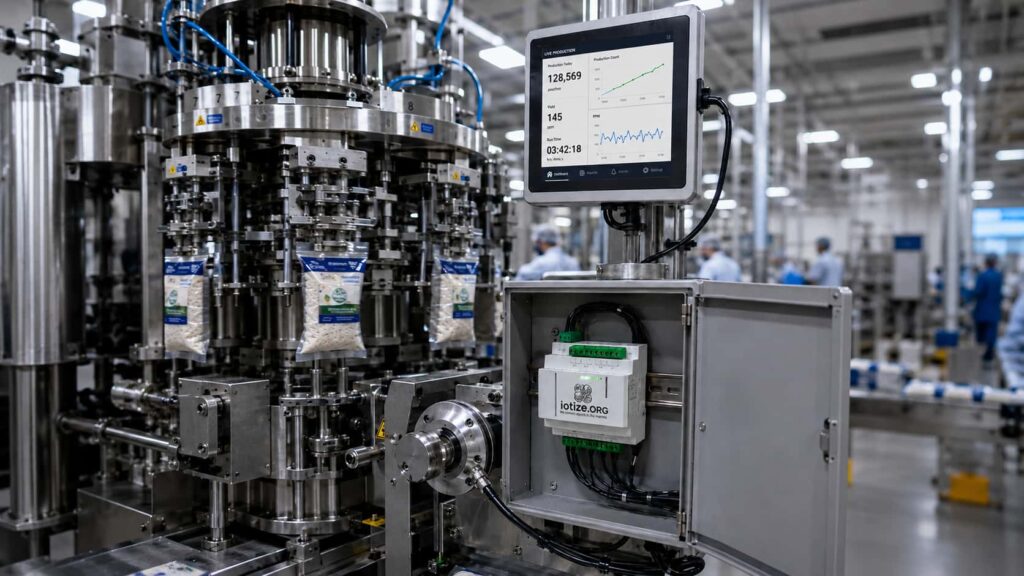
IoTize’s Enterprise Production Counter tracks output per shift alongside machine cycle data. A gradual decline in output per cycle, while the machine appears to be running normally, correlates with rising motor current draw detected by the energy monitor. Investigation reveals a mechanical jam developing in the feed mechanism, caught weeks before it would have caused a full stoppage.
Building a Predictive Maintenance Strategy with Industrial IoT
A predictive maintenance strategy is more than hardware. It combines the right sensors, a reliable data path, and the workflows that turn an alert into a completed work order. Industrial IoT predictive maintenance ties those pieces together.
Step 1: Asset Criticality Assessment
Not every machine needs predictive monitoring. Identify assets where failure causes the most harm; production stoppage, safety risk, costly secondary damage. Start with your highest-criticality equipment.
Step 2: Select the Right Sensors
Match sensor type to failure mode. Rotating machinery needs vibration monitoring. Electrical equipment needs current and energy monitoring. Motors benefit from both. Environmental factors like dust, heat, and humidity may require additional sensing.
Step 3: Build Your Data Infrastructure
Industrial IoT predictive maintenance requires reliable data transmission from the sensor to a place where it can be analyzed. This means robust wireless or wired connectivity on the factory floor, a data platform capable of storing and processing continuous time-series data, and dashboards maintenance teams will actually use.
Step 4: Define Baselines and Thresholds
After installation, run sensors in monitoring mode to establish normal operating baselines for each asset. Thresholds for alerting should be set relative to baseline, not generic industry numbers, to minimize false positives.
Step 5: Integrate with Maintenance Workflows
Sensor alerts are only valuable if they trigger action. Integrate your IIoT platform with your CMMS (Computerized Maintenance Management System), or at minimum establish a clear alert-response protocol so notifications reach the right person and result in a work order.
Step 6: Review and Refine
Review alert history, missed events, and false positives quarterly. Adjust thresholds, add sensors where gaps appear, and refine the model based on what the data is teaching you.
You do not have to start big. Begin with an affordable, easy to deploy device like the Smart Machine Temperature Monitor or the all in one Smart Machine Health Monitor on a single critical machine, then scale into full multi asset coverage with the enterprise devices.
The Five IoTize Predictive Maintenance Devices
When you are ready to act, IoTize offers five predictive maintenance devices that cover every signal in this guide, from a $59 temperature sensor to a dual-point enterprise machine health monitor. Each one is built for real manufacturing conditions and priced so the first step is genuinely within reach.
Smart Machine Temperature Monitor
Affordable contact sensor for motor and bearing temperature monitoring. Catches overheating early. Wi Fi.
View Product →Smart Machine Health Monitor
Vibration, temperature, and current in one affordable machine health monitoring device. The fastest way to start predictive maintenance on a critical machine.
View Product →Enterprise Vibration Monitoring Device
Enterprise vibration monitoring with RMS, peak, and FFT analysis for bearing wear detection on rotating machinery. HTTP, MQTT, Modbus TCP.
View Product →Enterprise Smart Machine Health Monitor
Dual point vibration, temperature, and current monitoring for variable speed machines. SCADA ready over HTTP, MQTT, and Modbus TCP.
View Product →Single Phase Energy Monitoring Sensor
Single phase energy and current monitoring. Tracks current, voltage, power, and power factor to flag motor overload and efficiency drift. SCADA ready.
View Product →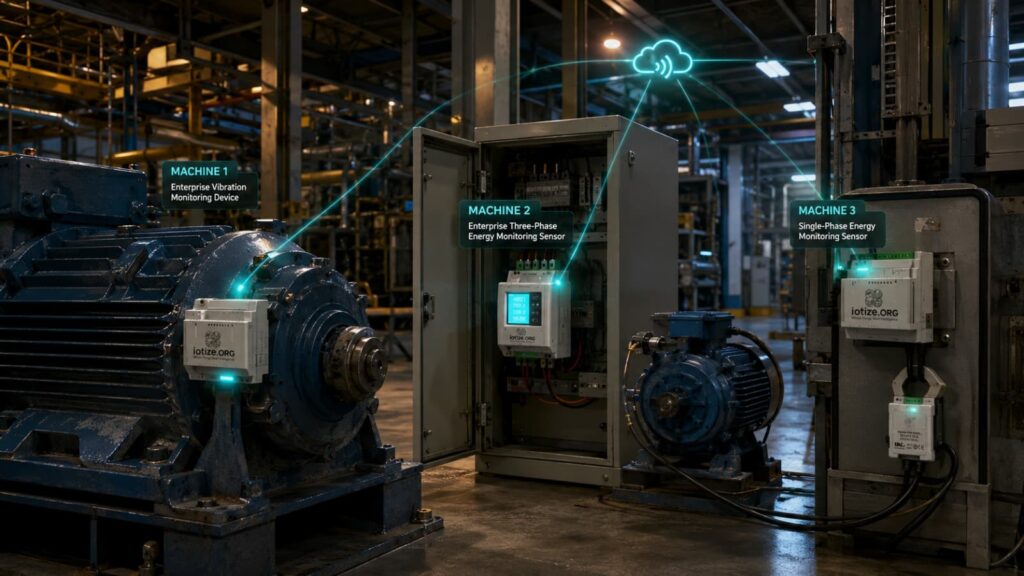
Conclusion: From Reactive to Predictive; The Case Is Clear
The question is no longer whether predictive maintenance works, because the evidence from plants around the world is clear and consistent. Rather, the real question is how quickly your facility can move from a reactive or calendar-based approach to one grounded in real-time machine data.
Naturally, the next thing to work out is which strategy actually fits your plant, and our comparison guide, Predictive Maintenance vs Preventive Maintenance: Which Is Right for Your Factory?, walks through the cost and ROI side by side.
If you already know predictive maintenance is the right call, you can go straight to the full IoTize predictive maintenance solution to see how vibration, temperature, and current monitoring come together in one platform.
Either way, you do not need to monitor everything at once. So start with your most critical assets, learn their baselines, and let the data show you what your machines have been trying to tell you all along.
What is predictive maintenance?
Predictive maintenance is a data-driven maintenance strategy that uses real-time sensor data to monitor equipment condition and predict failures before they occur, so maintenance can be scheduled at the optimal time preventing unplanned downtime without unnecessary early intervention.
How does predictive maintenance work?
Sensors mounted on equipment continuously measure physical parameters like vibration, temperature, and current draw. That data is compared against established baselines, and machine learning algorithms detect anomalies or deteriorating trends. When a developing fault is identified, the system can automatically generate a work order with enough lead time to plan and execute repairs before failure.
What is the difference between predictive vs preventive maintenance?
Preventive maintenance runs on a fixed schedule; you service equipment every X hours or X months regardless of its condition. Predictive maintenance uses real-time data to determine when service is actually needed. Predictive maintenance reduces unnecessary maintenance labor and parts costs while providing better failure protection.
What is condition based maintenance, and how does it differ from predictive maintenance?
Condition based maintenance triggers action when a measured parameter crosses a defined threshold — for example, when vibration exceeds a set limit. Predictive maintenance goes further by using trend analysis to forecast when that threshold will be crossed, allowing earlier and more planned intervention rather than a reactive response to a threshold breach.
What are the main benefits of predictive maintenance?
The main benefits include reduced unplanned downtime, lower total maintenance costs (18–31% lower than traditional methods according to IBM), extended equipment life, improved worker safety, increased uptime, and better production planning. Together, these benefits typically deliver a strong return on investment, particularly for high-utilization manufacturing environments.
What technology and analysis types are used in predictive maintenance?
Predictive maintenance relies on five core analysis types: vibration analysis, oil analysis, thermographic (thermal) analysis, acoustic analysis, and motor current analysis. These are paired with IIoT sensors, wireless data transmission, and increasingly, machine learning models that identify failure patterns automatically.
What are some real-world examples of predictive maintenance in manufacturing?
Common examples include detecting bearing wear on motors through vibration frequency analysis, identifying electrical faults through three-phase current imbalance monitoring, catching pump cavitation through pressure and vibration signatures, and tracking production output drops that correlate with mechanical degradation, all before a failure occurs.
How do I build a predictive maintenance strategy?
Start with a criticality assessment to identify your most important assets first. Select sensors matched to the failure modes you want to catch. Install, baseline, and set thresholds. Integrate alerts into your maintenance workflows. Review performance quarterly and refine. A phased approach starting with a small number of critical machines is more effective than trying to monitor everything at once.
From reactive to predictive maintenance
Explore the IoTize range of industrial sensors, built for real manufacturing conditions and priced so the first step is genuinely within reach.
Related Links
Products: Current Monitor (single-phase) · Machine Temperature Monitor · Vibration Monitoring Device · Smart Machine Health Monitor · Enterprise SMH-100
Solution : IoTize predictive maintenance solution
Blogs: Visit the IoTize blog →