Case studyGarment embroideryLahore, Pakistan

How a multi-head embroidery unit caught night-shift over-speeding on day one.

Liaquat Embroidery connected an IoTize production counter to their embroidery machines in one hour each. The first night of data showed what cameras never could: some operators were pushing machines up to 1,400 RPM to finish jobs early, wearing out even brand-new machines.

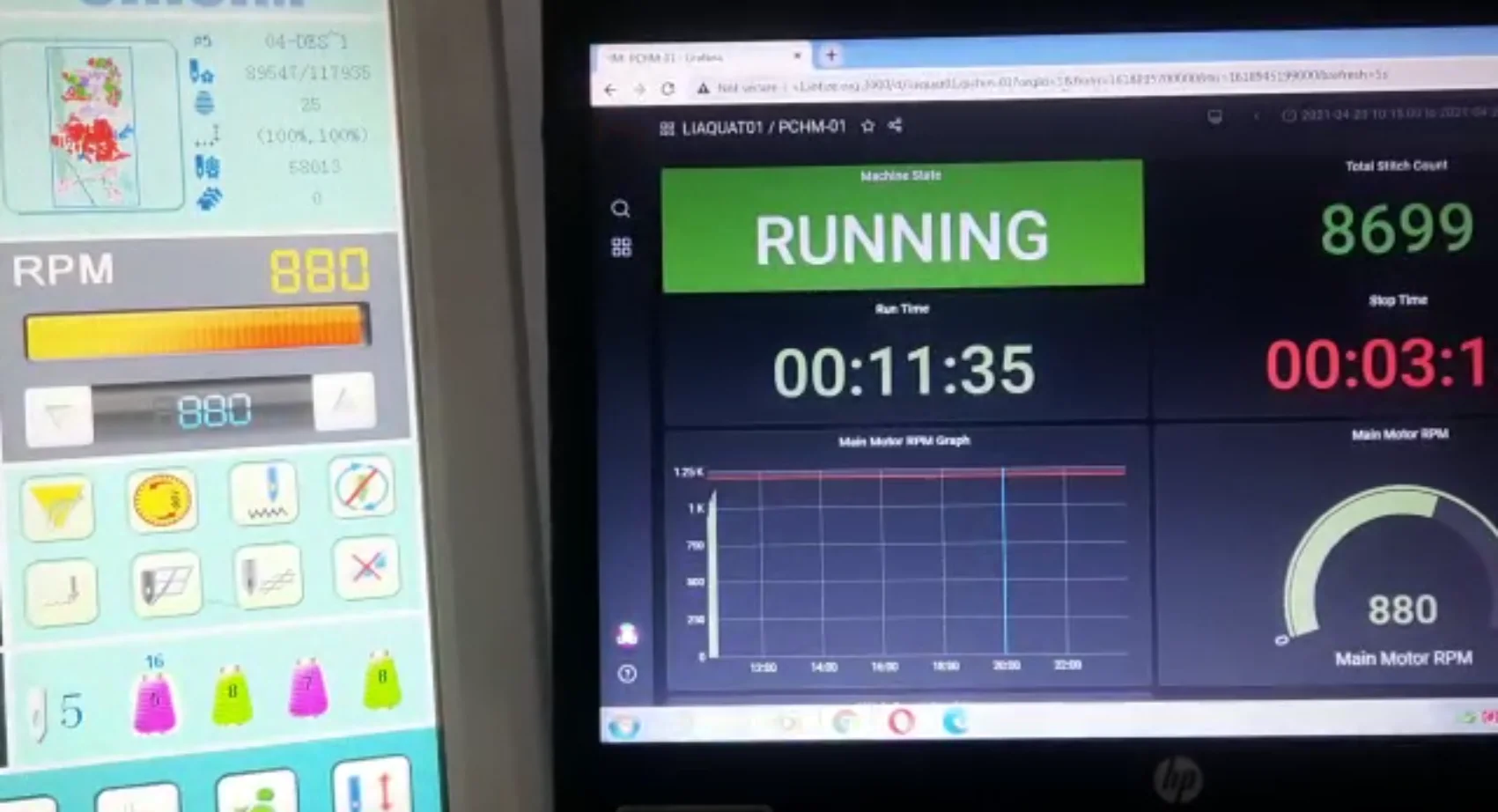
Embroidery machine controller showing 880 RPM beside the IoTize production dashboard also showing 880 RPM, machine state Running, at Liaquat Embroidery in Lahore
Machine screen●880RPM
IoTize dashboard●880RPM
Exact match, live
Real photo from the client's floor: the machine's own controller and our dashboard, side by side.
ClientLiaquat Embroidery
IndustryGarment embroidery
LocationLahore, Pakistan
InstalledApril 2021
AlertsWi-Fi dashboard + email
The results at a glance

One hour to install. One night to find the problem.

Numbers from the client's installation and the speeds their data recorded.

1hour
Install per machine

Connected in parallel to the machine's existing encoder. No change to the machine's controller.

Day1
First finding

Data logged from the first day. With alerts on, the owner hears about it the same night.

1,400RPM
Night speed caught

Against a normal 800 to 900 RPM. About 55% above the top of the normal range.

24/7
Steady, efficient work

Less maintenance, lower costs, and more devices ordered for more machines.

01 · The challenge

Cameras showed people. Nobody could see the machines.

Liaquat Embroidery runs computerized embroidery machines for garments in Lahore, around the clock. The owner had three problems that kept coming back, and none of them showed up on CCTV.

Labour inefficiency

Work wasn't getting done as efficiently as it should, and there was no hard data to show where the time went.

Cameras weren't enough

Video shows someone standing at a machine. It can't show how fast the machine is running.

Frequent wear and tear

Machines needed mechanical maintenance more often than expected, even the new ones.
02 · The solution

A one-hour retrofit on the machine's own encoder.

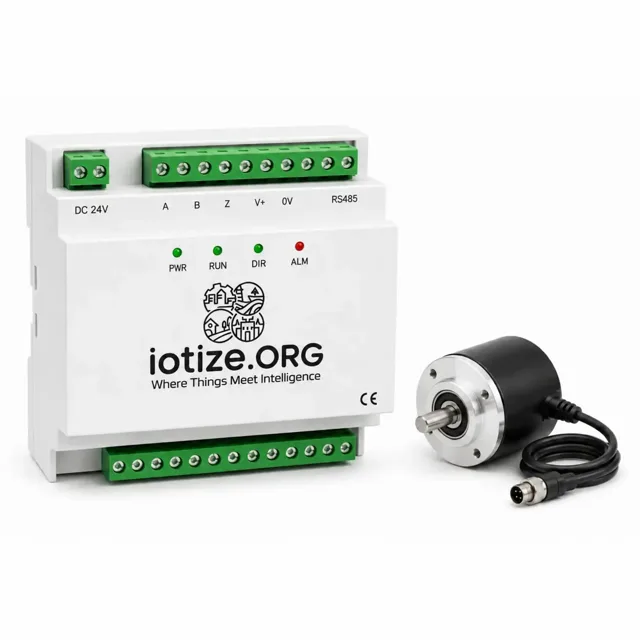
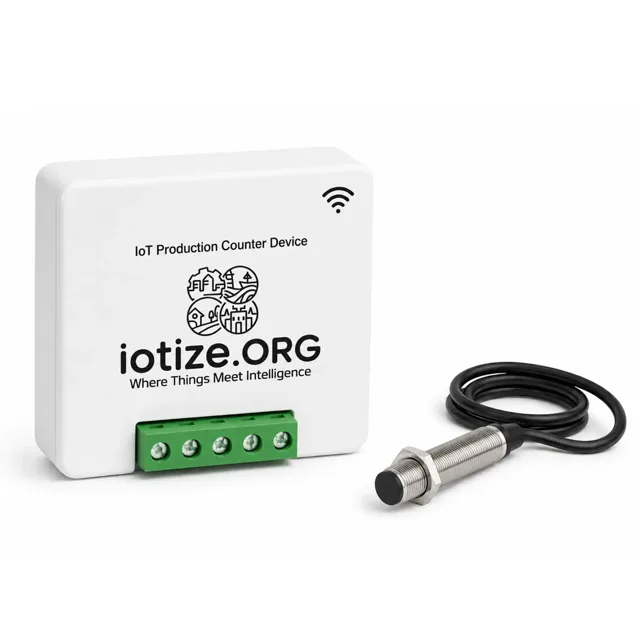
Every embroidery machine already has an A/B/Z encoder that tells its controller how the main motor is turning. We connected the IoTize Enterprise Production Counter to that same encoder, in parallel. The machine keeps working exactly as before, and our device reads the same signal.

From there, data goes over the factory's Wi-Fi to a live dashboard the owner checks from anywhere, with email alerts when something goes wrong.

About one hour per machineInstalled in April 2021, one machine at a time.
No change to the controllerA parallel connection on the existing encoder, so the machine's own settings stay exactly as they were.
Running / stopped stateRun timeStop timeTotal stitch countMain motor RPM, liveRPM history graphEmail alerts
03 · Proof it works

The dashboard reads exactly what the machine reads.

Before you trust data, you check it. These are real photos from the client's floor, not mock-ups. The machine's own controller shows 880 RPM, and the IoTize dashboard on the screen beside it shows the same 880 RPM, with the stitch count and run time ticking live.

Close view of the embroidery machine RPM display at 880 next to the IoTize dashboard gauge at 880 RPM with stitch count 8,699
880 = 880. Machine controller (left) and IoTize dashboard (right), same moment.
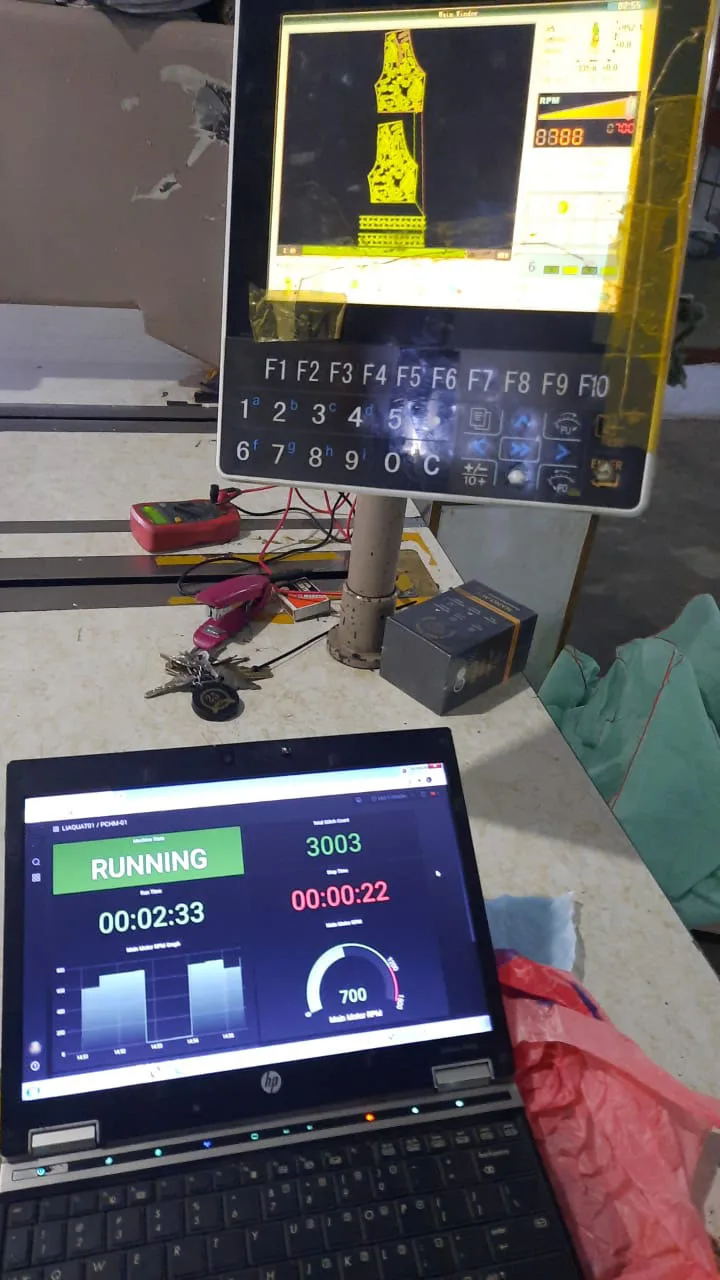
IoTize production dashboard open on a laptop beside an embroidery machine controller on the factory floor, showing Running, 3,003 stitches and 700 RPM
On the floor. The dashboard beside a second machine: Running, 700 RPM.
Original photos from the client's site. No stock images, no mock-ups.
04 · What the data showed

At night, some machines ran 55% faster than they should.

In the day, the machines ran in their normal range of 800 to 900 RPM. On some night shifts, certain operators pushed the speed up to 1,400 RPM to finish the job sooner.

A faster machine finishes earlier, but it pays for it in needles, threads and moving parts. That explained why even new machines kept needing mechanical maintenance.

Main motor RPM over 24 hoursNight shift
NIGHT SHIFT DAY SHIFT 5007501,0001,2501,500 08:0014:0020:0002:0008:00 NORMAL 800 to 900 RPM ALERT LIMIT Email alert sent Up to 1,400

Illustration of a typical 24 hours, drawn from the speeds the client's data recorded: 800 to 900 RPM normally, up to 1,400 RPM on some night shifts. Not a screenshot.

+55%
Above the top of the normal range

1,400 RPM against a normal maximum of 900.


Only certain operators

The data pointed to specific shifts and operators, not the whole team.


Not what they were looking for

Night speed wasn't part of the brief. The data found it anyway.

The owner installed IoTize to understand labour efficiency. The biggest finding was something nobody had asked about: how fast the machines ran when nobody was watching.

05 · What changed

An alert the same night, and a conversation the next day.

1
Day 1Installed and logging

Each machine connected in about an hour. Speed, stitches, run time and stop time were recorded from the first day.

!
The same nightOver-speed alert by email

When a machine went above the limit, the owner got an email that night, instead of finding out at the next breakdown.

2
NextThe owner talked to the operators

With the data in hand, the conversation was about facts, not suspicion. With alerts on, any repeat shows up the same night.

3
AfterMore machines connected

After the first installation, the client ordered more devices for more machines.

Efficient work, 24/7

Machines run in their safe range on every shift, day and night.

Less maintenance

Lower mechanical maintenance needs once over-speeding stopped.

Cost savings

Fewer repairs and less spent on parts and service.

A repeat order

More devices added after the first installation proved itself.

Is this your factory?

Your night shift may be doing the same thing.

This isn't only an embroidery problem. Any machine with a speed setting and a target to hit can be pushed too hard when no one is watching: looms, knitting machines, CNCs, printing lines. Tick what sounds like your plant.

Tick any that apply.

See what your machines do when no one is watching.

Tell us about your machines and shifts. We'll recommend the right counter and show you a live demo dashboard.

About this case study: installation in Lahore, April 2021. Client name used with permission; individual names and machine counts kept private at the client's request. Photos are original images from the client's site.

How can we help?